Showing posts with label wine and food. Show all posts

Monday, May 31, 2021

BONDING AT THE DINNER TABLE: SOBREMESA BY ANY OTHER NAME


I've always been a voracious reader and can never refuse a book. Lately I've been reading plenty of biographies and business books and was looking for something lighter for bedtime reading. So when Cam from Culinary Adventures with Camilla offered a new book to preview, I was all in! The book - Sobremesa: A Memoir of Food and Love in Thirteen Courses by Josephine Caminos Oria - arrived accompanied by two bottles of Argentine wine from Bodega Norton, courtesy of Kobrand Wine and Spirits. Most definitely an ideal package of pairings for the summer.

THE BOOK
Briefly summarised, the book is a poignant memoir of Josephine's life straddling two cultures: American and Italian-Argentine. But it's more faceted than that. It's also about Josephine's experiences with her culture and elders - in life and in spirit - and her encounters with them.

The book is full of ingredients of typical first generation American life: suburban everything, but with a thick layer of a specific culture, in her case, Italian-Argentine. We may agree or not, but so much revolves around food and the dining table. The dining table is where stories are swapped, the daily catch up happens, current events/travel plans/grades/life goals/any other topics are discussed, the food itself is oohed and aahed over, and then a few hours later it all moves from the dining table to the drawing room to talk through the rest of the afternoon or evening over dessert or a coffee/tea and perhaps a digestif. It is where children learn table manners but also how to socialise. This habit, common across most old cultures, is elegantly summarised in one word in Spanish: sobremesa.

As stories go, Josephine's is an intriguing tale of the spiritual world mixed into her daily life. Childhood in America, a stint in Argentina along with a romance that led her to making a family with the love of her life, lasting bonds with extended family in Argentina, return to America, and her business, all with the continued presence of her ancestral spirits and people dead and alive that influenced her life in so many ways. Read the book to find out more!

As is often the case, food evokes memories and memories are intimately tied to food. Josephine's vivid memories of food are chronicled throughout the book and at the end of each chapter she gives us a recipe. From salad to dessert, it's all there, and certain to inspire us to rustle up something in the kitchen.

THE FOOD
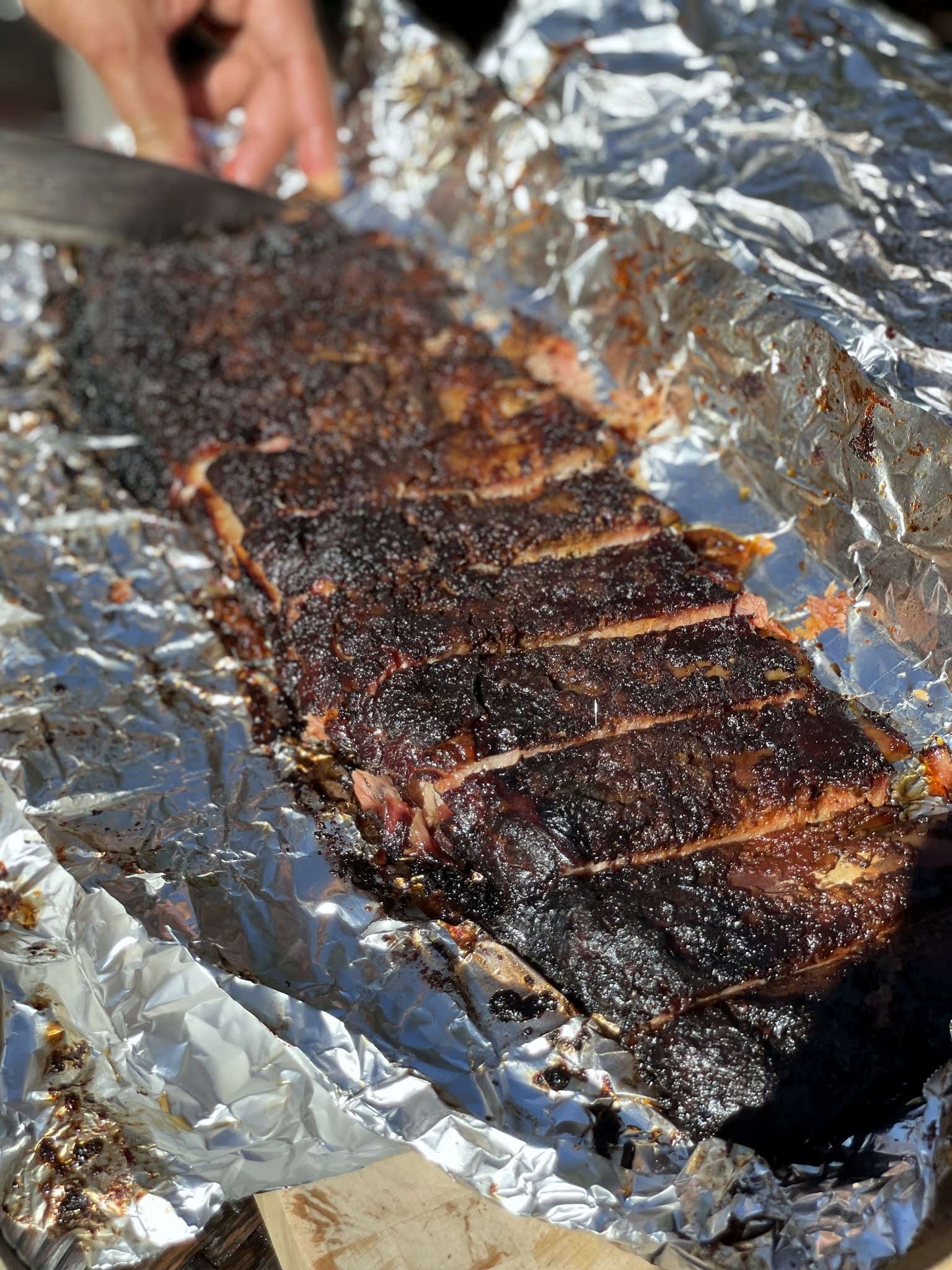
The thirteen chapters of the book = as many recipes, each a different course. After a long 2020 of minimal social contact, we had our first party to inaugurate return to life as we've known it. We had friends over for a Memorial Day lunch-that-lingered-into-after-midnight and I made the Ensalada de Palmitos (Hearts of Palm salad) with the orange vinaigrette rather than the salsa golf. We had it with smoked baby back ribs and potato salad, baked beans, etc. The acid in the vinaigrette perfectly cut through the fat in the ribs and the citrus flavours brightened it all up. Definitely will be a regular!

THE WINE
Founded in 1895 by Edmund James Palmer Norton, Bodega Norton is one of the most awarded Argentine wine brands in the US. The estate has grown to over 1,750 acres of estate vineyards and over 3,000 acres of land holdings. It has been owned by Austrian businessman and entrepreneur Gernot Langes Swarovski, of the Swarovski Crystal company, since 1989. Their diverse portfolio of wines is sure to offer something for every occasion, every meal, and every cuisine.

We opened the sample of the 2019 Bodega Norton Reserva Chardonnay, which was superb with the ribs and salads, but also the snacks of spiced nuts and appetizer of grilled corn-ricotta dip with potato crisps and crudités.

The grapes for this Chardonnay come from 30 - 50 year old (mature) vines, and the wine is aged in 100% French oak for 6 months followed by 3 months in bottle before release. The wine is a pale gold colour flecked with green, and offers a complex nose and palate of ripe citrus+stone fruit, a rather faint hint of vanilla, and a long mineral-edged finish.

We almost never have wine without food but I can see this being an afternoon sipper, especially with a riveting book to keep company. I can certainly say that I enjoyed both, the wine and the book!


 

Saturday, March 13, 2021

YAKIMA VALLEY WINES FTW #WINEPW

In March 2021 the Wine Pairing Weekend group is exploring the wines of Yakima Valley, Washington, USA. For a primer on Yakima Valley wines, see the overview in host Robin's preview post. Also join us on Twitter under #WinePW on Saturday, 13 March 2021 at 8 AM PST to talk about all things Yakima Valley wine.

YAKIMA VALLEY AVA

Image: https://www.washingtonwine.org/
The Yakima Valley AVA 
and the other AVAs in the region are on land that was originally inhabited by the Yakama and other native people before colonisation and resulting land grabs. It is part of the larger Columbia Valley AVA in the southern part of Washington state in the Pacific Northwest region of the US.

Spanning approximately 70 miles east to west, it lies within the valley of the Yakima River. The AVA has over 18,000 acres of grapevines and has formally been an AVA since 1983, making it WA's oldest AVA. 1983 - not that long ago, right? I know! But grapes have been grown here since the 1860s. 


Today, 40-50% of WA state's wine grapes come from the Yakima Valley AVA, a fertile area that, prior to sharing space with grapevines, was full of fruit orchards and other cash crops. Even today, 80% of the US' hops production is in this area. The volcanic soil and temperate climate is ideal for high acidity in grapes. Cool but also warm enough to allow the grapes to ripen without turning jammy. The majority of grapes here are Chardonnay, Cab Sauv, Riesling, Pinot Gris, Syrah, and Merlot although as you'll read below, other varietals are also grown here. It's definitely an underrated wine region, one to keep an eye on!

I have been focussed on small wineries with a personal touch for a while now, and the fact that I was sent two wine samples from two small wineries with a personal story couldn't be more perfect. Athough the wines were complimentary, as always, all opinions are mine.

CÔTE BONNEVILLE
Côte Bonneville is the very definition of a family run winery. Hugh Shiels planted the DuBrul vineyard on a 45 acre in 1992 and established Côte Bonneville in 2001. Hugh, a former orthpædic surgeon and still a part-time doctor, his wife Kathy, formerly a physical therapist, and daughter Kerry who is the winemaker, together run the estate. Hugh and Kathy turned their love for wine into a winery, and Kerry left engineering to study oenology at UC Davis before bearing the mantle of winemaker. Here are three professionals who made an impact on people first through their professions and now through their stellar wines!

At DuBrul vineyard, from where the grapes for Côte Bonneville's vineyard designated wines come, the rocky terrain, poor soil, and deficit irrigation regimen coax small yields of small berries in small clusters from the vinesThe vineyard was awarded Vineyard of the Year in 2007 and 2009, and the wines continue to be acclaimed by critics and sought after by consumers. 
Image: https://www.cotebonneville.com/

2018 Train Station Cabernet Franc
100% Cabernet Franc
14.1% ABV | SRP $30 | SAMPLE

Sourced from a mere 26 rows of Cabernet Franc with own-rooted vines (not grafted onto different rootstock), this estate-bottled Cab Franc is a special one because there's only so much grape to go around from such few rows. As it turned out, in 2018 there was enough to set aside a small chunk to make a single varietal wine.

Colour: 
Medium ruby

Nose: 
Ripe red fruit - especially raspberry and strawberry, white flowers, vanilla, black pepper at the finish

Palate: 
This is a wine full of gaeity - it will immediately put you in a good mood. With a layered aromatic complexity and a rounded mouthfeel, it has the same notes on the palate as on the nose, and a whiff of dried violets. Medium body, balanced acidity, balanced tannins, medium finish. Despite the 14.1% ABV, it definitely doesn't feel like it. A fruity and very food-friendly wine that's certainly ready now but could also be cellared for up to 3 years.

CO DINN CELLARS
You don't have to know Co of Co Dinn Cellars long to know how passionate he is about wine making. I was already agreeing with him on everything I'd read in his introduction on his website, and then I had a phone conversation with him. His matter-of-fact intensity shows in everything he says, and the love for the craft of wine-making is more than evident in everything he says. Co will readily tell you that he is not a farmer and does not grow his grapes, but he will also tell you in depth that he is very particular about the grapes he sources and it clearly shows in his wine. Even though I have only tasted exactly one of his wines, I don't doubt for a second that all his wines are elegant and worth seeking out.

Although Co Dinn wines aren't on shelves in the Bay Area, they can be shipped directly to consumers and I highly recommend you take advantage of that.

2016 GSM Lonesome Spring Ranch Vineyard
41% Grenache, 30% Syrah, 29% Mourvèdre
14.7% ABV | SRP $45 | SAMPLE

The Lonesome Spring Ranch (LSR) vineyard is one of the "jewels" Co mentions in his intro. In its previous life the LSR vineyard was pasture and an apricot orchard. Established in 1996, this 109+ acre property is now a vineyard farmed using Vinewise management practices. But really, the talent is not just in the vineyard or growing the grapes, but in what the winemaker does with the grapes to make superior wine. And that is just what this wine is... superior in all aspects.

Colour: 
Deep ruby

Nose: 
Black fruit, a hint of cooked red fruit, dried savoury herbs, tobacco, black pepper, leather, faint baking spice

Palate:
The same notes on the palate as on the nose but also black cherry and lingering tobacco and coffee on the finish. Medium body, balanced acidity, soft tannins, long finish. This is a beautifully structured wine that really shines when paired with meaty food.

THE WINE + FOOD
As soon as I tasted each wine I knew what I wanted to pair with it. Here in N. CA we're going into spring but with some typical last minute weather vacillations, so I took advantage of the rain and cold and decided to pair the wines with pasta and meat courses at dinner. Farfalle with rapini, olio nuovo, and pecorino with the Cab Franc, and a compound salt-crusted ribeye with braised fennel and potatoes with the GSM.

Pasta, 1st course: The garlic and slight bitter notes of the rapini toned down by the al dente pasta, olio nuovo drizzle, and the salty edge of the pecorino were incredible with the juicy, ripe, fresh, acidity of the Cab Franc. The next day the wine had gone from a juicy wine to a more sombre one that would definitely be excellent with a dish that incorporates tomato sauce... something like meatballs with ricotta and a tomato sauce, bread on the side. Either way, this is a delicious wine and we couldn't have asked for a better pairing! 

Steak, 2nd course: The herbed compound salt-crusted steak along with the fennel and potatoes stood up nicely to the wine. At first, the wine was a bit closed and rather serious wine even after a 60 min. decant. Nevertheless, the complexity of the wine highlighted the slight sweetness and anise of the fennel and of course, was wonderful with the steak. And the potatoes, well, can't ever go wrong with get steak and potatoes! All in all, we really enjoyed the wine together with the food and if I had to summarise this wine in one sentence it would be: This wine needs food, and make it red meat!

As Jean-Baptiste Poquelin, better known as Molière, said, "Trees that are slow to grow bear the best fruit." And so, the first day the wine was quite tightly wound although still terrific with our steak, but when we revisited this the next day, it had opened up to a most delightful wine full of primary fruit aromas leading into greater depth. The structure and mouthfeel did not change drastically but every aroma was deeper, more pronounced, more present, lingered longer. We had it with charcuterie (no bread, cheese, etc.) and it was splendid! I love what Co at Co Dinn Cellars is doing and his passion for his craft is obvious in his wine!

So that was me, but the possibilities are endless so check out these blog posts and be inspired by what the rest of us sipped, savoured, and paired with our Yakima Valley wines:
  • Robin at Crushed Grape Chronicles leads the way with “Yakima Valley AVA – Blends of friendship and history with wines from Eight Bells and Pearl and Stone Co.”
  • Payal at Keep The Peas shares “Yakima Valley Wines FTW!”
  • Camilla of Culinary Adventures with Cam shares “Yakima Valley’s Sin Banderas Rhone Roses Compliment Dishes with Asian Flair” and “Mediterranean-Inspired Dishes Paired with Yakima Valley Wines from Dineen Vineyards”
  • Linda at My Full Wine Glass invites us to “Meet Kerry Shiels: A Yakima Valley winemaker with Vision”
  • Terri of Our Good Life shares 2 posts “Fortuity…Taking Advantage of Life’s Great Wines!”, and “Two Mountain Rose and Fennel Wild Mushroom Tarts”
  • Wendy of A Day in the Life on the Farm is cooking up “Smoked Beef Brisket with Canvasback Cabernet”
  • Rupal the Syrah Queen gives us “Yakima Valley – Red Willow Vineyards Producing Some of Washington’s Finest Syrahs”
  • Jane of Always Ravenous makes our mouths water with “Filet Mignon paired with Washington Yakima Valley Cabernet Sauvignon”
  • Martin with ENOFYLZ WineBlog is giving us “a Taste of Washington State’s Yakima Valley”
  • David at Cooking Chat has 2 posts for us also “Lamb Ragu Pasta with Red Wine from Dineen Vineyards” and “Sin Banderas Rosé with Corned Beef & More Yakima Valley Wine Pairings”
  • Nicole of Somm’s Table shares “Big, Beautiful Reds from Yakima Valley and Tasty, Meaty Fare”
  • Jennifer at Vino Travels tells us about “Italian Grapes of the Yakima Valley with Sleeping Dog Wines”
  • Gwendolyn the Wine Predator explores “Washington Syrah: Hedges, L’Ecole, VanArnam with Lamb Stew”
  • Susannah at Avvinare gives us “Malbec from VanArnam Vineyard in Yakima Valley”
  • Lori at Exploring the Wine Glass shares “Tasting the Soul of Wine in the Heart of Yakima Valley”

Saturday, February 20, 2021

A BANDOL RED AND LAMB BIRYANI

Image: Domaine de la Bégude

In February 2021 the French Winophiles, aka #winophiles on social media, are exlporing red wines of Provence. Find out more when the #winophiles tackle all things Provence red wine on Twitter on 20 February 2021 at 8 AM PST.

As I'd mentioned in my preview post, when we hear wine and Provence in the same sentence we almost always - and rightfully so - think of rosé wines of all shades made from grapes growing in impossibly sunny and clement weather in southern France. But in fact Provence offers more than delicately coloured rosé wines and visions of lavender fields near the Mediterranean sea. Formidable red wines come out of Provence just as well as rosé and white wines. Made from from a variety of grapes... something for everyone and for all kinds of pairings. 

Provence has 9 viticultural regions or AOCs (Appellation de’Origin Contrôlée). Among those, the ones known for red wine are Bandol (arguably the most famous Provençal red wine AOC), Baux de Provence, Palette, Bellett, and the newest AOC (since 1998), Pierrevert. Red wine grapes here include varieties found throughout much of France such as Grenache, Syrah, Mourvedre, Tannat, Counoise, Cinsault, and Cabernet Sauvignon, but also grapes not often seen elsewhere like Folle Noir, Calitour, Tibouren, Barbaroux, and Braquet. All in all about 36 grape varieties are allowed in Provence spanning a few different countries including Spain and Italy, although in Provence they are generally known by their French/Provençal names.

DOMAINE DE LA BÉGUDE
Located 400 m above and overlooking the Mediterranean, this winery spans 1300 acres of land including 57 acres of vineyards. The property enjoys both, Mistral-brushed sunny days and cool nights. Outstanding complex and elegant wines come from the outstanding garrigue-laden mosaic of soils combined with the 7 generations old winemaking pedigree of Guillaume Tari. Although we selected a red, La Bégude makes rosé, white, and red wines, all certified organic by ECOCERT.


2018 Domaine de la Bégude Bandol Rouge
90% Mourvedre, 10% Cinsault
14.5% ABV | SRP $35

Colour: 
Deep ruby, almost looks over-extracted

Nose: 
Dark berries right up front, anise, baking spices, herbal notes mixed with earth, a faint hint of dried red roses. Quite lovely and definitely does not smell over-extracted.

Palate: 
This is a very elegant savoury wine with surprising complexity given its young age. The same notes on the palate as on the nose, but with an unexpected savouriness despite the overt berry-laden nose. Medium body, balanced acidity, grippy tannins that loosen up after ~1 hr. A beautifully structured wine that will undoubtedly benefit from 5-7 years in the cellar.

THE WINE + FOOD
We opened this wine to pair with a lamb chop biryani. Lamb is somewhat of a guaranteed match for most southern French red wines but the surprise was in how synchronised the dark berries, anise, garrigue, and the faint dried rose floral notes in the wine were with the complex aromatics and Kashmiri saffron in the biryani. The fragrance of aged Indian basmati rice was an added layer of elegance in this entire combination. 

I would not recommend this restrained complex wine with spicy food (like fiery South Indian style biryanis) but it is a match made in heaven for the layered complex flavours of North Indian biryanis or Persian food (the birthplace of biryani).

In India we never make things like tandoori anything, naan, or biryani at home because it is a bit of a chore, the flavour is never as good,  and tandoors are usually communal ovens not home cooking equipment. Nevertheless, I'm glad it was the dish of choice for my procrasticooking in the face of a project deadline. I needed a break from work and my post-work trip quarantine so this came at the right time.

Check out these blog posts and be inspired by what the rest of us sipped and savoured:

    Wednesday, June 12, 2019

    FRENCH #WINE(OPHILES) AND CHEESE


    The poetic thing about time is that it is an endless story that continues to be written. The poetic thing about human evolution is that it is but an endless chapter in that story. Food, water, and war are inherent to the story of human evolution. While war through the ages has greatly influenced water and changed regional foods throughout the world, the industrial revolution and resulting modernisation are recent events. Before then, food was a perishable commodity eaten locally, not transported thousands of miles. The people of then were, by necessity, proponents of "what grows together, goes together". The original locavores!

    This is best exemplified by the French who absolutely love to classify and bracket everything including their honey, chickens, onions, walnuts, wine, cheese, and more, to emphasize the importance of the sense of place, or terroir. They believe that the best representation of a certain food or drink comes from it's place of origin. Having grown up with very seasonal and very local Indian ingredients I'm inclined to agree with that concept. Historically in wine-making areas including France, wine was the preferred beverage because it was cleaner than water and a low ABV inconsequential quaff. None of this well extracted 13-14+% fancy stuff of now. And each region - in our case French - had its own wine and food, because people used ingredients that were available where they lived. With time, water became cleaner and potable, grape growing and vinification evolved, and so did people's tastes. By the time the French obsession love for classification came about, the low ABV wines of history were long gone and regional wine trends were well established. Many foods including cheese, though, continued to be made the old-fashioned way and so, for example, since receiving AOC status, Mont d'Or or Comté aren't so unless made in Franche-Comté from the milk of Montbéliarde cows and packaged according to tradition. And really, there's no argument that Harbison from New Jersey, USA is simply not Mont d'Or no matter what anyone says. And "Chablis" from CA and Chablis from Chablis... we won't even go there!

    This month the French Winophiles are focusing on French wine and cheese. The easiest - or perhaps most nuanced - pairing, and around our house cheese trays are their own food group. Martin of Enofylz Wine Blog has hosted this one, and I'd recommend you don't miss it! 

    CH. LABÉGORCE ZÉDÉ, MARGAUX, 2007

    2007 was one of the last vintages of this label which ceased to exist in 2009 when it was rolled into the Labégorce estate. In 2019 it definitely needed a good 1+ hours of decanting, but after that the beautiful deep-ruby-with-hints-of-garnet wine had aromas of dried roses,  licorice, plum, tobacco, dried mint, cigar, medicinal notes, and a decidedly savoury/meaty finish. Medium bodied overall, with balanced tannins and a medium finish. Most definitely a wine for food! Overall this wine was a delight, and we're glad we've got one bottle left.

    13.5% abv, SRP $26-$30.

    THE FOOD: We paired the wine with a cheese tray with an assortment of French cheeses (+ a few bits and bobs of other EU cheeses) and meats, plus the usual garnishes. A versatile and successful pairing in all ways and we especially loved the savouriness of the meat with the meaty-barnyard notes of the wine!

    Like turmeric which only exists in two forms: dried and fresh, cheese exists in one form: coagulated milk from an animal. But unlike turmeric which does not pair well with wine, cheese and wine uplift each other and in fact, seem to be made for each other. So enjoy!

    See what sage insights my fellow #winophiles are sharing about French wine and cheese:


    Friday, May 10, 2019

    LIVING OFF THE LAND: KING ESTATE PINOT NOIR + MUSHROOM PÂTÉ


    This month (May) the Wine Pairing Weekend group is focusing on biodynamic wines from Oregon, and more specifically, from the Willamette Valley, OR. OR has the most number of certified biodynamic wineries in the US: a hefty 30%+!

    So chances of finding a biodynamic wine from there are large. Or not, depending on how closely you look. Demeter, the largest certifying organization for biodynamic products, maintains a list on their website here. But if you're expecting a comprehensive list of wineries sorted by country, region, etc. prepare to be disappointed. You can certainly take the long-hand approach and narrow it down by crop, etc. but it's as I said, long-hand. So I took the other approach: went to the store, picked up bottles, looked up the wineries to see if they're biodynamic, narrowed down options, picked one because that's all I had time for to taste, pair, and write about hours before leaving town!

    Demeter was established in Europe in 1932, and Demeter USA in 1985. According to their website, "Demeter USA is the only certifier for Biodynamic farms and products in America. While all of the organic requirements for certification under the National Organic Program are required for Biodynamic certification, the Demeter standard is much more extensive, with stricter requirements around imported fertility, greater emphasis on on-farm solutions for disease, pest, and weed control, and in depth specifications around water conservation and biodiversity." It is really the only biodynamic certification I have ever heard of in the US, probably also because Demeter own the Biodynamic trademark.

    I chose a 2016 King Estate Pinot Noir because of the region, the winery, the grape (they are the self-proclaimed Kings of Pinot), the size, and the fact that before they were Biodynamic, they were Organic. No cutting corners here! At 1,033 acres, King Estate is the largest Demeter-certified biodynamic winery in the US. But they make sublime wines, even the ones that are not Pinot Noir.

    THE WINE: Short story because no time to decant and see how it develops!

    A gorgeous deep ruby with a pretty pink rim, notes of ripe red fruit - strawberries, raspberries, red currants, cherries - plus sweet vanilla, black tea and a faint hint of wet forest leaves on the nose and palate. The acid and tannins work in unison on the palate with just enough of both to keep you coming back for a sip. The finish is medium+ but really you're not waiting too long between sips with this wine anyway!

    Overall this wine is an utter delight, especially at 13.5% abv and $26.

    THE FOOD: We paired the wine with one of my favourite Pinot pairings: pâté. But I wanted a vegetarian mushroom pâté and our local Whole Foods - my go-to spot for all kinds of pâtés - was out of their mushroom version. Since it was a last minute decision to participate this month, I was at a construction site the whole day, and had to battle traffic both ways, I was really looking for a quick pairing with no cooking. But no mushroom pâté to be bought and I wasn't in the mood for meat so I had to make it myself. It was actually not that hard or time consuming and except the mushrooms I had everything in the pantry already so I ultimately ran out of excuses for me and just made it. I also added to the mix a truffle Gouda and a Talleggio. We loved all of it with the wine!

    The Wine Pairing Weekend group has a whole slew of terrific pairings to inspire us all! Check them out here: