Showing posts with label chardonnay. Show all posts

Monday, October 28, 2024

COPPO WINERY 2023 CHARDONNAY "COSTEBIANCHE" x VEGETARIAN PUNJABI FOOD


This month we had a bonus event at the World Wine Travel group - #worldwinetravel - thanks to a generous offer from Coppo 1892 winery to sponsor our wines. Coppo is a winery dating back to 1892 but it is also a UNESCO World Heritage Site (2024) in Monferrato, Piemonte, Italy. It is Q4 and nearly year-end so with everyone's life and travel schedules we did not have a chat for this bonus event. But the list of (and links to) all of us who've written about Coppo wines is at the end of this post so do scroll over to browse each article and be inspired!

COPPO WINERY

In Piemonte, spreading over 85 hectares across Monferrato and Langhe, Coppo winery has been in operation since 1892, registered as a historic enterprise with uninterrupted activity in the same sector since they started. Their subterranean tufa limestone cellars at a depth of 40 m., were likely excavated in the 18th century for use as small storage cellars with subsequent expansion leading to their current area extending over 5,000 sq. m. Since 2024, these impressive and ethereal underground cellars have earned the honour of being listed as a UNESCO World Heritage Site. The vast underground network of spaces is used as cellars for Coppo wines, but it is also an engineering marvel, a look into the geology of the region, and a glimpse into œno-architecture. Don't miss a chance to visit Coppo the next time you're in Piemonte!

https://www.coppo.com/en/vineyards/

For many years Coppo has been committed to sustainability and followed organic and biodynamic techniques. Since 2001 they have officially committed to integrated agriculture and agronomic principles with the aim of having a reduced environmental impact.

THE WINE AND THE FOOD

2023 "COSTEBIANCHE" CHARDONNAY, PIEMONTE DOC
100% Chardonnay
ABV 13.5%
SRP $29

The "Costebianche" Chardonnay gets its name (white slopes) from the white limestone hills of the vineyard and surrounds. The grapes grow in calcareous clay marl soil and are hand-harvested after careful selection, and ater the initial soft pressing, they are partly fermented and aged on fine lees in barriques and partly in stainless steel vats. 

Looks: clear, straw yellow

Nose: lemon, white flowers, faint hint of pineapple

Palate: Echos the nose, but also has a fresh savouriness and a creamy edge. A very light but refreshing and juicy wine with a medium finish.

Pairing: We had the Costebianche Chardonnay with two Punjabi vegetarian dishes: chana jor garam and mattar paneer. Having just returned from a month of work in Hawai'i, cooking anything elaborate was out of the question. But after a month of all the tropical fruit and Ahi poké and rice in HI, as much as I had relished the fresh tuna everyday, I was also craving familiar Indian flavours. So we settled for take-away from the one restaurant near us that makes real Punjabi food that isn't loaded with cream (which is lavishly used in the West but never in India) while being devoid of proper flavour.

And in the pantry I found a packet of flattened Indian chickpeas that are used for chana jor garam, a classic street snack around most of India. It couldn't be easier to make - mix together the flattened chickpeas, diced onion and green chillies, chilli powder, chopped coriander, a bit of lemon juice, rock salt, chaat masala.

We started off with snacking on the chana jor garam paired with the Chardonnay. That was a hit! The lemon juice, rock salt, chaat masala, and earthy chickpeas were perfect with the citrus and faint hint of pineapple in the wine. The wine elevated the chana jor garam which in turn made the wine taste juicier. I would absolutely pair the two again.

Then we went on to the main meal of mattar paneer (peas and paneer) cooked in a complex, mildly spiced sauce garnished with cream and redolent with flavours of typical North Indian spices. We had it with naan and pickles. The mild but complex mattar paneer, slight tang of the pickles, and neutral naan with the Chardonnay were excellent, although we enjoyed the wine with the chana jor garam much more.

[Pickles play a significant role in Indian culinary tradition and are prized for their balanced flavour but also their role in digestion and gut health. Every region has it's own specific kind of pickles made with whatever vegetables or fruits are in season. Typical pickles of Punjab have mangoes, carrots, turnips, lemons, and cauliflower in any combination, seasoned with nigella seeds, mustard oil, and other seasonings.]

I've talked about the Coppo wines that I'd received but we all received different wines from the great array of wines Coppo makes. See what the other writers sipped, savoured, and talked about below.

Monday, May 31, 2021

BONDING AT THE DINNER TABLE: SOBREMESA BY ANY OTHER NAME


I've always been a voracious reader and can never refuse a book. Lately I've been reading plenty of biographies and business books and was looking for something lighter for bedtime reading. So when Cam from Culinary Adventures with Camilla offered a new book to preview, I was all in! The book - Sobremesa: A Memoir of Food and Love in Thirteen Courses by Josephine Caminos Oria - arrived accompanied by two bottles of Argentine wine from Bodega Norton, courtesy of Kobrand Wine and Spirits. Most definitely an ideal package of pairings for the summer.

THE BOOK
Briefly summarised, the book is a poignant memoir of Josephine's life straddling two cultures: American and Italian-Argentine. But it's more faceted than that. It's also about Josephine's experiences with her culture and elders - in life and in spirit - and her encounters with them.

The book is full of ingredients of typical first generation American life: suburban everything, but with a thick layer of a specific culture, in her case, Italian-Argentine. We may agree or not, but so much revolves around food and the dining table. The dining table is where stories are swapped, the daily catch up happens, current events/travel plans/grades/life goals/any other topics are discussed, the food itself is oohed and aahed over, and then a few hours later it all moves from the dining table to the drawing room to talk through the rest of the afternoon or evening over dessert or a coffee/tea and perhaps a digestif. It is where children learn table manners but also how to socialise. This habit, common across most old cultures, is elegantly summarised in one word in Spanish: sobremesa.

As stories go, Josephine's is an intriguing tale of the spiritual world mixed into her daily life. Childhood in America, a stint in Argentina along with a romance that led her to making a family with the love of her life, lasting bonds with extended family in Argentina, return to America, and her business, all with the continued presence of her ancestral spirits and people dead and alive that influenced her life in so many ways. Read the book to find out more!

As is often the case, food evokes memories and memories are intimately tied to food. Josephine's vivid memories of food are chronicled throughout the book and at the end of each chapter she gives us a recipe. From salad to dessert, it's all there, and certain to inspire us to rustle up something in the kitchen.

THE FOOD
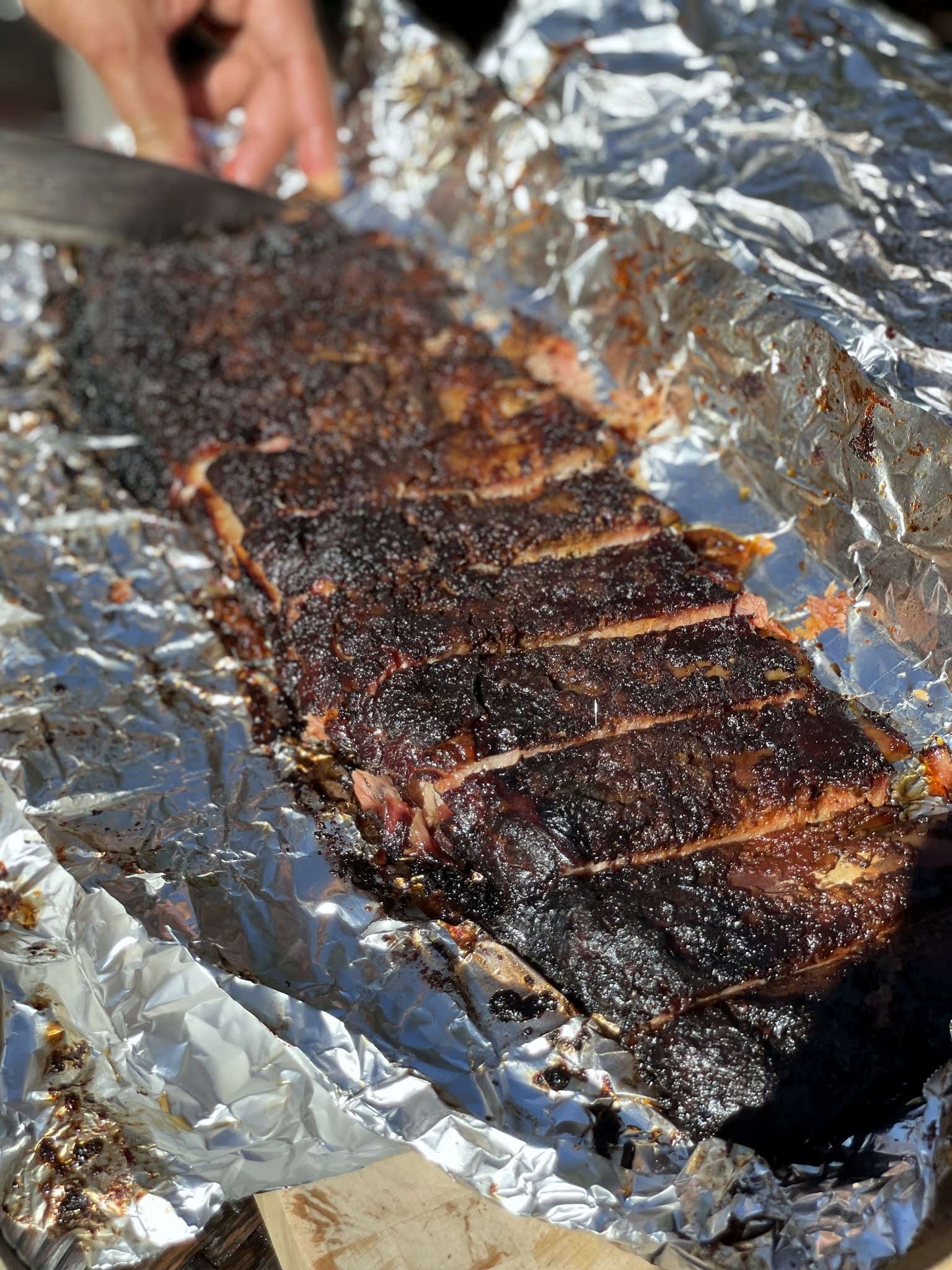
The thirteen chapters of the book = as many recipes, each a different course. After a long 2020 of minimal social contact, we had our first party to inaugurate return to life as we've known it. We had friends over for a Memorial Day lunch-that-lingered-into-after-midnight and I made the Ensalada de Palmitos (Hearts of Palm salad) with the orange vinaigrette rather than the salsa golf. We had it with smoked baby back ribs and potato salad, baked beans, etc. The acid in the vinaigrette perfectly cut through the fat in the ribs and the citrus flavours brightened it all up. Definitely will be a regular!

THE WINE
Founded in 1895 by Edmund James Palmer Norton, Bodega Norton is one of the most awarded Argentine wine brands in the US. The estate has grown to over 1,750 acres of estate vineyards and over 3,000 acres of land holdings. It has been owned by Austrian businessman and entrepreneur Gernot Langes Swarovski, of the Swarovski Crystal company, since 1989. Their diverse portfolio of wines is sure to offer something for every occasion, every meal, and every cuisine.

We opened the sample of the 2019 Bodega Norton Reserva Chardonnay, which was superb with the ribs and salads, but also the snacks of spiced nuts and appetizer of grilled corn-ricotta dip with potato crisps and crudités.

The grapes for this Chardonnay come from 30 - 50 year old (mature) vines, and the wine is aged in 100% French oak for 6 months followed by 3 months in bottle before release. The wine is a pale gold colour flecked with green, and offers a complex nose and palate of ripe citrus+stone fruit, a rather faint hint of vanilla, and a long mineral-edged finish.

We almost never have wine without food but I can see this being an afternoon sipper, especially with a riveting book to keep company. I can certainly say that I enjoyed both, the wine and the book!


Friday, May 22, 2020

ISRAELI WINE WITH THE DIVERSE CUISINE OF THE DIASPORA


https://winesisrael.com 
Israeli wine has come a long way from being absent from the global wine map to making  a strong presence around the globe. Viticulture has existed in the area now called Israel since biblical times, and wine was even exported to Rome at one point. However, the entire industry eventually died off with increased Islamic dominance in the area due to their religious rules about wine. Fast forward to much later, the modern Israeli wine industry was established in the late 1800s with the help of Baron Edmond James de Rothschild of the Rothschild banking and wine family but it really only took off after Israel was formed ~1948. Locally made wine was being sold within Israel earlier but it has continued to make a presence in other countries around the globe, although the US remains the primary export destination for Israeli wine.

For further reading, Wines Israel is an excellent resource to dive deeper into Israeli wine, past, present, and future.

JEWS AND THEIR CUISINE IN INDIA
The cuisine of the Jewish diaspora has always fascinated me because of its diversity and the nimbleness with which Jewish people have adapted foods to meet their religious and dietary requirements everywhere they have ended up. This includes India, which philosophically has nothing to do with Judaism but is a famously tolerant place that has offered protections and respect for cultural and religious proclivities to foreign communities who decided to stay in India after initially coming for trade and commerce.

Jewish people came to India initially as traders in the time of King Solomon’s reign (~970 to 931 BC) and stayed, and then after the Alhambra and King Manuel's Decrees which expelled Jews from Spain and Portugal if they did not convert to Christianity. The Hindu monarchs of the time offered numerous privileges to these waves of Jewish immigrants including land grants, tax exemptions, the freedom to speak their language, and freely practice their religion. These Jewish groups established themselves in India, built synagogues, and truly mixed  with the Indian population adopting elements of local  cultural habits and food. All of this was mostly in the coastal Indian states of Kerala and Maharashtra.

Indian Jews made their own wine, challah, and matzo because there were no Jewish bakeries, and like the Muslims do, they had their own butchers who slaughtered meat per Kosher requirements. As the Indian Jewry left or passed away, so did the butchers, and eventually the communities ate mostly vegetables and seafood along with the abundant varieties of rice, spices, and produce adapted from local recipes.

After Israel was established in ~1948 many Indian Jews emigrated to Israel. Although their centuries old synagogues and houses lay largely vacant in India, they continue to carry forward their synthesised cultural and culinary habits in their newly adapted land. I thought it would be interesting to connect the dots and discover how Indian Jewish food pairs with Israeli wine and ponder over whether the Indian Jews who are cooking their ancient hybrid Indian recipes in Israel ever pair them with local wine as they had done in India!


THE WINE + FOOD PAIRING
2014 Binyamina Winery Yogev, 12.5% ABV
SRP $20
WINE: According to the winery, "Our winegrowers instill their crops with their own individual character, Israeli roots and genuine love of the land, inspiring us to name this Series in their honor. Wines in the Yogev Series have been blended using the finest grapes from the best vines cultivated by our most outstanding winegrowers. Simply put, this is the very essence of our wines." The wine is an 80-20 cepage of Sauvignon Blanc and Chardonnay from the oldest vineyards in the Upper and Lower Galilee, and strives to be a "harmonious fusion between two noble varieties".

Regarding the wine-making process, the winery says, "The Sauvignon Blanc grapes are harvested two weeks after the Chardonnay grapes. Both varieties are brought to the winery and immediately pressed to extract the best quality free run juice and maintain freshness and aroma. After a natural clarification of the must, the wine is transferred for a slow alcoholic fermentation at low temperatures. The wine is then transferred for brief storage in stainless steel tanks until selection of the final varietal blend. Contact with oak is deliberately avoided in order to maintain maximum freshness. The wine is bottled after filtration and is released after briefly aging in the bottle."

NOTES: We thought that the wine is a beautiful medium lemon colour, clean with a medium intensity and predominantly citrus + white flower on the nose. On the palate it is crisp, medium-bodied with a juicy medium acidity and intensity, and grapefruit/lemon and pear notes with green apple and orange blossoms in the back palate ending with a medium finish. Overall this is a simple wine and considering that this has no oak aging, I can't see how it would age well beyond 2020.

FOOD: We enjoyed the 2014 Yogev with a lovely Keralan lunch of ponganam (rice+lentil crepes) and mutta kari (egg curry) from the book Spice & Kosher. The wine paired exceptionally well with the warm herbaceous of the curry leaves, the smoke of the toasted black pepper, and sweetness of caramelised onions in the curry along with the slight tang of the crepes made from a fermented batter.

FUN FACTS
The egg curry recipe is from Matilda Davidson, from Petah Tikva, Israel, a city that started small but became a permanent settlement in the late 1880s thanks to financial help from Baron. As I've mentioned above, he also helped establish the modern wine industry in Israel.

The word "curry" is anglicised from kari, a Tamil word for dishes seasoned with leaves from curry plant and meant to be eaten with rice or crepes. Kari isn't always saucy, and can be sweet or savoury. There are also 1000s of different kinds of crepes in India, and since rice grows exceptionally well in the wet humid climate, it dominates southern Indian cuisine so the crepes in South India are all rice and/or lentil-based. Seafood also aplenty, and each region has it's favourite fish. Also, in India oysters are considered poor fishermen's food so they never make it to the markets!


Pop over to the websites of everyone below to see what they've done with their Israeli wine and food pairings! And then come talk about it at #WinePW on Twitter on Saturday, 23 May @8 AM PST.

  • Terri at Our Good Life shares “Grilled Mahi Mahi and Gilgal Sauvignon Blanc. Our Good Life”
  • Gwendolyn at Wine Predator shares “The Eternal Light Shines in Galilee: Yarden Merlot, Pinot Gris”
  • Wendy at A Day in the Life on the Farm shares “Lamb Stuffed Eggplant and a perfect Wine from Galilee”
  • Deanna at Asian Test Kitchen shares “Yarden Wines Paired with Japanese Surf ‘n Turf”
  • Rupal at Syrah Queen shares “Off The Beaten Path – Two Wines From Isreal’s Galilee Appellation”
  • Linda at My Full Wine Glass shares “Of Israeli wines, long-ago memories, and Harvey’s takeout”
  • David at Cooking Chat shares “Pairings for Gilgal Sauvignon Blanc from Israel”
  • Payal at Keep the Peas shares “Israeli Wine with the Diverse Cuisine of the Diaspora”
  • Nicole at Somms Table shares “Memories of Yarden Wines with a side of Meatball Shakshuka”
  • Jennifer at Vino Travels shares “Pairings with Wines from Israel”
  • Camilla at Culinary Adventures with Camilla shares “Peppered Brisket, Honeyed Onions, and the 2106 Galil Mountain ‘Ela’”
  • Pinny at Chinese Food and Wine Pairings shares “Enjoying Gilgal Cab Sauvignon – Merlot and Yarden Pinot Gris with Grilled Wagyu Steak, Alaska Sockeye Salmon and Poke Ahi Tuna Bowl”
  • Jeff at Food Wine Click! shares “Two Fisted Wine Pairing with Yarden Wines”

Saturday, April 20, 2019

CHABLIS: A TALE OF TWO SOILS


If Eminem were rapping about white wine, he might have said: 

May I have your attention, please?
May I have your attention, please? 
Will the real Chablis please stand up? 

Chablis... so much to be said about it and evocative of so many personal meanings and  memories. Including perhaps utter shock at the discovery that Chablis is just... chardonnay!  A grape originally from Burgundy, France. Chances are, that if you were drinking "chablis" through the early 2000s, etc. it was literally any white wine that someone wanted to call chablis because it sounds more legitimate than calling it White Wine. It did not *have* to be Chablis from the Chablis AOC in Burgundy - you know, the real Chablis - or even Chardonnay, which no one seemed to think was an important distinction. All this because after reeling in the aftermath of WWs I and II, powdery mildew and phylloxera, Chablis faded into the background for a long time. The vineyards eventually made somewhat of a successful comeback but the casual misuse of "Chablis" continued unchecked around the world. In 2006 luckily, things were cleaned up and a regulation was passed that restricted the name Chablis to wine produced in the Chablis AOC in Burgundy, France, a stone's throw from the charming village of Chablis, and where chardonnay is the only grape used to make Chablis. That's the Chablis we're exploring with The French #winophiles this month (April).

Source: National Academies of Sciences, 
Engineering, Medicine
Now that we know, let's get into it... a nerdy topic very dear to me: masonry, stone, and all things related. Such as geology, which really is just a time-lapse of the life-cycle of stone. It tells the story of how each type of stone, soil, mass of mineral dust was born, how it lived, and how it has continued to shape-shift its way through millions of years. It tells the story of the carbon cycle. Ashes to ashes, dust to dust.

TERROIR
Terrior - climate and soil - informs the flavour of all edible things including coffee, cacao, and wine. Non-aromatic grapes like chardonnay which aren't loaded with beautiful fruit and floral notes especially rely on terroir and vinification for the final outcome, i.e. what you smell and taste in the wine. Chardonnay is native to Burgundy and, dare I say, the best expression of the grape comes from wine made there. Especially in Chablis, a northerly cold region of Burgundy where the ancient seabed has formed two distinct sedimentary soil types: Kimmeridgian (clay + limestone) and Portlandian (weathered limestone). Both named after stages of the Jurassic epoch and both formed from heated and compressed remnants of ancient molluscs and shellfish. 

Portlandian, Kimmeridgian, Portland stone, Portland cement, limestone, ancient Roman tabby concrete - all same but different, all requiring thermal decomposition of molluscs. Created by heating (burning) shellfish shells, mixing with  more shells, sand, and water, poured into moulds if you're making something like a wall, or left free-form in nature. A basin of limestone marl starts near the Isle of Portland, Dorset in England (where Portland stone originates and where Portland cement was invented), and runs all the way down through Champagne, the Loire Valley, and Burgundy.

Tabby Walls at Ft. Livingston, LA (Source: P. Vora, personal collection)
(Fun Fact: to see Portland stone, visit the UN headquarters in NYC or Buckingham Palace, London. To see dramatic shell-studded tabby walls, see the photo to the left or snag a visit to Ft. Livingston, Grand Terre Island, LA - I worked on that partially submerged structure after the BP oil spill in 2010 and it remains my most challenging and fascinating project.)

Grapevines love limestone soil - it offers an abundant source of plant-accessible calcium carbonate, greater nutrient uptake by the vines, excellent water retention and drainage capacity, so less irrigation and less chance of water-logged soils. All factors which work in favour of chardonnay, a grape with early bud break that thrives in a cool climate. But despite the apparent similarities between Portlandian and Kimmeridgian, both soils have a remarkably different effect on the grapes.

THE WINES
I decided to compare the effect of the two soils by tasting a Petit Chablis (Portlandian) and a 1er Cru Chablis (Kimmeridgian). Paired both with oysters on the half-shell and a spiced ginger-infused mignonette. I also paired the 1er Cru with a classic Bengali (east Indian) dish of red snapper in a mustard sauce, shorshe maach.


2016 DOMAINE L. CHATELAIN PETIT CHABLIS: A simple wine with a medium finish, citrus on the nose and palate, delicious minerality. Crisp, refreshing, and easy to drink. Excellent with fresh, briny local oysters from up the coast. 13.5% ABV, $22

2017 DOMAINE L. CHATELAIN 1ER CRU CHABLIS: A bright citrus and lemon curd base with white flower, green apple, and pear overlays followed by a flinty finish and a soft mouthfeel to balance the acidity. This was an excellent pairing with both, the oysters and the mustard fish. 13.5% ABV, $35

If you need more inspiration to try a Chablis, see what the other French #winophiles are saying about their Chablis adventures:

  • Cam at Culinary Cam Brings Us “Cracked Crab, Cheesy Ravioli, and Chablis”
  • Robin at Crushed Grape Chronicles writes about “Mont de Milieu Premier Cru Chablis from Simonnet-Febvre and Pochouse”
  • Gwendolyn at Wine Predator Shares “Chablis is … Chardonnay? Comparing 2 from France, 1 from SoCal Paired with Seafood Lasagna”
  • Liz at What’s in That Bottle Shares Chablis: the Secret Chardonnay
  • Deanna at Asian Test Kitchen Writes about “Top Chablis Pairings with Japanese Food”
  • Jennifer at Beyond the Cork Screw Has “French Companions: Chablis and Fromage Pavé”
  • Payal at Keep the Peas writes about “Chablis: A Tale of Two Soils”
  • Jane at Always Ravenous has “Pairing Chablis with Marinated Shrimp Salad”
  • Jeff at Food Wine Click! shares “All the Best Food Pairings with Clos Beru Chablis”
  • Jill at L’Occasion writes about “Metal Giants: Windfarms and the Chablis Landscape”
  • Susannah at Avvinare writes “Celebrating France with Chablis and Toasting Notre Dame”
  • David at Cooking Chat writes about “Sipping Chablis with Easter Dinner or Your Next Seafood Meal”
  • Pinny at Chinese Food & Wine Pairings writes about “A Delicate Pair: Jean Claude Courtault Chablis and Sichuan Peppercorn-Cured Salmon”
  • Nicole at Somm’s Table writes about Domaine Savary Chablis Vieilles Vignes with Scallops and Brussels Sprouts Two Ways”
  • Kat at Bacchus Travel & Tours shares “The Delicate Face of Chardonnay: Chablis”
  • Wendy at A Day in the Life on the Farm Brings Us “Chardonnay? White Burgundy? Chablis!”