Showing posts with label wine review. Show all posts

Friday, February 4, 2022

JUST NOW DISCOVERING OLTREPÒ PAVESE WINES


In February the Italian Food Wine Travel group #ItalianFWT explored wines from the relatively less known region of Oltrepò Pavese in northern Italy. Our host Susannah Gold graciously sent some of us samples to review. Two of the wines sent for this review were samples but as always, wine tasting notes and opinions are unbiased and my own. Do read the invitation post here and remember to join us on Saturday, 5 February at 8 AM PST on Twitter at #ItalianFWT to hear about who knew what and what they thought.

THE REGION
  
https://www.champagnesparklingwwc.co.uk/messy-pavese/
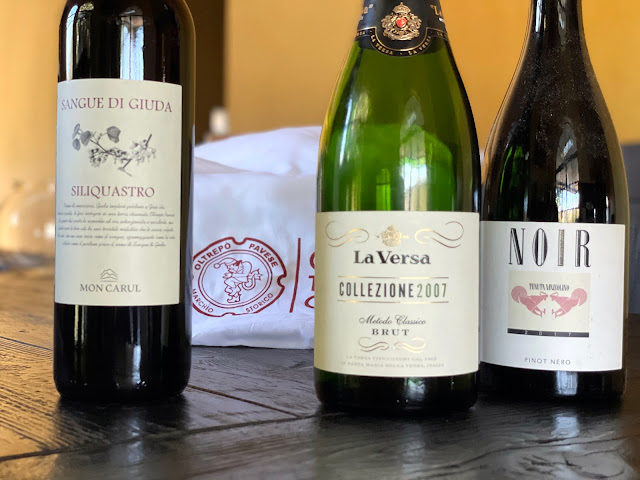
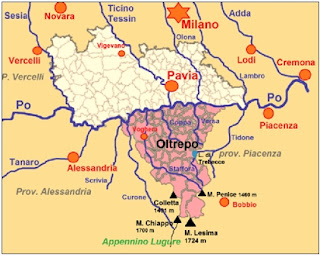
Oltrepò Pavese DOC (Pavia across the (river) Po in Lombard) is in Lombardy, Italy, centred around the village of Pavia. It is known for its classic method sparkling wines of the appellation Oltrepò Pavese Metodo Classico DOCG made primarily from Pinot Nero and still wines made from other international grape varieties, as well as a higher residual sugar wine called Sangue di Giuda (blood of Judah) made from Italian grapes Barbera, Croatina, and Uva Rara. With an ABV hovering at less than 10%, Sangue di Giuda is an excellent choice for an apéro paired with a paté and fruit. The rich soil combined with the closeness to the River Po gives the region an excellent terroir and incredible wines at an incredible QPR. I really wonder about other wine regions that are hidden gems in Italy! 

By a fortuitous coincidence, the Slow Wine tasting in San Francisco was in late January where M and I got to dive deeper into Oltrepò Pavese and met the lovely Director and Press from the Consorzio Tutela Vini Oltrepò Pavese. We hit it off almost instantly and they were delighted to know that I was new to Oltrepò wines. We went right when the event began but the wines were late so we had plenty of time to talk. They insisted we taste everything they thought would be interesting to us and after an animated tasting of almost all their wines they sent us off with a bottle of Sangue di Giuda. If you want to know more about Oltrepò Pavese wines visit them here

THE WINE AND FOOD

LA VERSA 2019 + STUZZICHINI + SPUNTINI (SNACKS + SMALL BITES)
85% Pinot Nero, 15% Chardonnay
ABV 13%
SRP ~$28 | SAMPLE
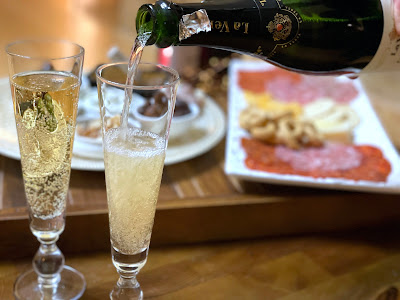
Having spent 144 months on the lees, this wine was an excellent example of Oltrepò Pavese Metodo Classico DOCG wines.

Looks: bright yellow with flecks of gold and fine racy perlage

Nose: brioche, red fruits, cooked stone fruit

Palate: Echos the nose, but also has warm yeasty notes of brioche and a faint saline mineral edge. Racy and persistent bubbles, a very well structured intense and elegant wine with a delicious, long finish. 
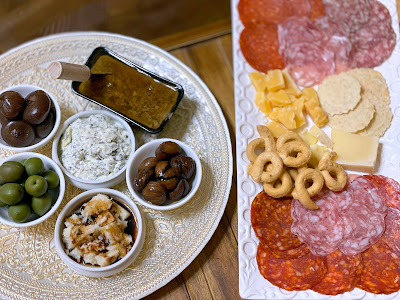
Pairing: We wanted a variety of flavours with this wine so we agreed to have them all! We enjoyed this wine with honey-soaked chestnuts, a black pepper paté and garnishes, Parmigiano Reggiano drizzled with aged balsamic vinegar, salami Varzi and others, 3 year Gouda and a Grana Padano, olives, and an assortment of crackers, grissini, and other bread-y things. We loved each and every single pairing. The chestnuts, salami Varzi, Grana Padano, and the Parmigiano Reggiano with aged balsamic vinegar are definitely traditional regional matches for Oltrepò Pavese wines, but really enjoyed snacking on it all. Sharing always makes everything taste much better, I think! The next time we would pair this with a borlotti bean risotto, another Pavese classic. 


Oltrepò Pavese was new to me but I'm sure some of the other writers are familiar with it so see below and read what everyone tasted, enjoyed, and reviewed!
  • Our host Susannah at Avvinare, talks about “Wine Treasures To Be Found in Oltrepò Pavese."
  • My discovery of this region is here on Keep the Peas where I talk about “Just Now Discovering Oltrepò Pavese Wines"
  • Camilla from Culinary Adventures with Camilla adds Second Pours of Oltrepò Pavese Wines with Braised Short Ribs and Puff Pastry”
  • Linda from My Full Wineglass brings “Flying under the radar with an Oltrepò Pavese sparkling rosé”
  • Terri from My Good Life dishes about “Stone Crabs with Oltrepò Pavese.”
  • Martin from Enofylz showcases “A Taste Of The Unsung Wines of Oltrepò Pavese”
  • Deanna from Winevore posts “Wine for the Priest! from Oltrepo Pavese, Italy”
  • Jeff from Food Wine Click! waxes about the “Surprising Wines of Oltrepò Pavese”
  • Rupal from Syrah Queen post “Oltrepò Pavese Wines -One of Italy’s Best Kept Secret”
  • Gwendolyn from Wine Predator showcases “2 Pinot Nero from Oltrepo’ Pavese #ItalianFWT”
  • David from Cooking Chat reflects on “Tasting and Pairing with Oltrepo’ Pavese Wines” 
  • Wendy from A Day in the Life on the Farm checks out “Cheesy Vegetable Lasagna paired with Oltrepo Pavese Wine”
  • Liz from What’s In that Bottle suggests we “Check Out “the Other Side of the Pó” for Tasty Italian Wines “
  • Jennifer from Vino Travels adds “Pinot Nero in Abundance in the Oltrepò Pavese”
  • Lisa from The Wine Chef writes “Off The Beaten Path: Oltrepò Pavese, A Wine Region to Know About.”


Friday, September 17, 2021

EVERYDAY WINES FROM THE CÔTES DU RHONE


September is the perfect time to explore versatile wines from Côtes du Rhône (CdR) AOC. Join us #winophiles as we taste and nibble our way through the AOC. We will be talking about all things CdR on Twitter under #winophiles on Saturday, 18 September at 8 AM PDT. Check out host Wendy's post and if you have things to say, chime in on sat AM. If you just need some AM wine talk with your coffee, come and spectate. Either way, it's going to be full of interesting facts and luscious food pics so don't miss it!

Some of us got samples through our event sponsor Côtes du Rhône thanks to the coordination efforts of Jeff from Food Wine Click. As always, samples or not, our opinions remain solely ours. 

CÔTES DU RHÔNE AOC
www.winefolly.com
Wine has been produced in the Rhône since pre-Roman times and everything including wine at that time was politicised but no history lesson here, so let's talk about now. In the most simple terms, Rhône wines rank like this from bottom to top: CdR-CdR Villages-CdR named Villages-Cru. At the top the crus include heavy hitters like Côte Rôtie, Hermitage, Tavel, etc. and then we have the CdR AOC wines which some might say are basic. But they really aren't. The CdR is further broken into two subregions: méridional and septentrional.

50% of the wine produced in the Rhône valley is classified as CdR AOC. The CdR AOC makes red, white, and rosé wines with regulatory requirements dictating grape varietals and blends allowed. If I had to summarise CdR AOC wines I'd say: versatile, well-made, excellent QPR, and worth a visit.


THE WINES
I received 6 bottles of wine including wines from CdR, CdR Villages, and CdR Named Villages AOCs. Most were red, one was white, and one rosé. It was a beautiful line-up and I opened two reds. I paired one with a top sirloin steak and one with Peshawari chapli kebabs. Both were delicious with each wine.


INOPIA ROUGE 2017 + TOP SIRLOIN AND SIDES
Grenache, Mourvèdre, Counoise, Syrah, and Cinsault
ABV 14%
SRP $31 | SAMPLE

I am such a fan of this exquisite wine. According to the tech sheet, Inopia, which translates from Latin as "made from nothing", refers to a neglected barren plot near the village of Orange that Mounir and Rotem Saouma purchased in 2011. They planted the plot densely to Grenache, Mourvèdre, Counoise, Syrah, and Cinsault (plus seven more). All the grapes are hand-harvested at cool temperatures and undergo one week of whole-cluster maceration, followed by a fifteen-day fermentation with no punch-downs or pump-overs. The wine is then pressed and split among a combination of French oak foudres, cement eggs, and 500-liter barrels for 18 months of maturation without racking. The wines are then bottled without fining or filtration. 

Looks: ruby with flecks of pink garnet

Nose: mainly dark red fruits, dried herbs

Palate: Echos the dark red fruits from the nose, but especially ripe cherries, dried resinous herbs, and a saline mineral edge. Velvet-y tannins, full body, juicy acidity, and a long finish. This is a polished wine and one to look for.

Pairing: It's tough to to wrong with Rhône reds and steak but this wine especially really took each bite to such a satisfying level. We enjoyed this wine with a pan-seared top sirloin lightly rubbed with mustard, dried herbs, and butter with roasted potatoes, meaty shiitake mushrooms, and horseradish sauce. The mushrooms were roasted in the pan sauce while the steak was resting and the horseradish sauce was homemade with Mexican sour cream, not sharp, and matched the saline mineral edge of the wine splendidly.


LOUIS BERNARD ROUGE 2018 CÔTES DU RHÔNE VILLAGES
70% Grenache, 30% Syrah
ABV 13.5%
SRP $14 | SAMPLE

Since 1976 Loius Bernard has been building partnerships throughout the Rhône valley through whom he continues to make carefully crafted wines.

This wine is Made from Grenache and Syrah, hand-harvested at optimal ripeness, destemmed then vinified separately. After a cool-temperature maceration and fermentation period of 3 weeks, the wine is aged for an additional 10 months before bottling. As in the wine, there is thought put into the design of the bottle which pays homage to the regional heritage with a crested coat of arms and distinctive label of a historic arched stained-glass window.

Looks: ruby with a faint purple edge

Nose: mainly dark black fruits, soupçon of baking spices

Palate: Dark red fruits similar to the nose, black pepper at the end. Silky tannins, juicy acidity, medium body and finish. This is a lively young wine and I would say best enjoyed young to relish the fruit and spice, but it is an elegant wine nevertheless.

Pairing: We enjoyed this with a summer lunch in the garden of Peshawari lamb and beef chapli kebabs, mint chutney, Arabic bread, and garnishes. The warmth of the lamb and the spices in the kebabs + the mint chutney were a gorgeous match with the wine. The spicy edge of the wine walked hand in hand with the complex spices in the kebabs. We would absolutely do both again!

And this is what everyone else is saying about the wines they received/selected so do read and be inspired to open a bottle!
  • Jeff from Food Wine Click! thinks we should Embrace the Base of the Côtes du Rhône Pyramid.
  • Cindy of Grape Experiences suggests we Sip Wine from the Côtes-du-Rhône... then Visit the Rhône Valley
  • Mel of Wining with Mel introduces us to The Wonderful World of Chapoutier in Côtes du Rhône.
  • Terri of Our Good Life tells you What You Need to Know about Côtes du Rhône Wines.
  • Robin of Crushed Grapes Chronicles talks about Côtes du Rhône & Côtes du Rhône Villages – a plethora of flavors to pair with!
  • David of Cooking Chat shares Grilled Sirloin Steak and Cotes du Rhone
  • Jen of Vino Travels takes us on A Journey Through the Cotes du Rhone
  • Linda of My Full Wine Glass introduces us to Red, white and pink-The colors of Cotes du Rhone wine
  • Jill of L'Occasion is Feeling Satisfied with Cotes du Rhone
  • Susannah of Avvinare shares A Fresh Look at the Cote du Rhone

Monday, May 31, 2021

BONDING AT THE DINNER TABLE: SOBREMESA BY ANY OTHER NAME


I've always been a voracious reader and can never refuse a book. Lately I've been reading plenty of biographies and business books and was looking for something lighter for bedtime reading. So when Cam from Culinary Adventures with Camilla offered a new book to preview, I was all in! The book - Sobremesa: A Memoir of Food and Love in Thirteen Courses by Josephine Caminos Oria - arrived accompanied by two bottles of Argentine wine from Bodega Norton, courtesy of Kobrand Wine and Spirits. Most definitely an ideal package of pairings for the summer.

THE BOOK
Briefly summarised, the book is a poignant memoir of Josephine's life straddling two cultures: American and Italian-Argentine. But it's more faceted than that. It's also about Josephine's experiences with her culture and elders - in life and in spirit - and her encounters with them.

The book is full of ingredients of typical first generation American life: suburban everything, but with a thick layer of a specific culture, in her case, Italian-Argentine. We may agree or not, but so much revolves around food and the dining table. The dining table is where stories are swapped, the daily catch up happens, current events/travel plans/grades/life goals/any other topics are discussed, the food itself is oohed and aahed over, and then a few hours later it all moves from the dining table to the drawing room to talk through the rest of the afternoon or evening over dessert or a coffee/tea and perhaps a digestif. It is where children learn table manners but also how to socialise. This habit, common across most old cultures, is elegantly summarised in one word in Spanish: sobremesa.

As stories go, Josephine's is an intriguing tale of the spiritual world mixed into her daily life. Childhood in America, a stint in Argentina along with a romance that led her to making a family with the love of her life, lasting bonds with extended family in Argentina, return to America, and her business, all with the continued presence of her ancestral spirits and people dead and alive that influenced her life in so many ways. Read the book to find out more!

As is often the case, food evokes memories and memories are intimately tied to food. Josephine's vivid memories of food are chronicled throughout the book and at the end of each chapter she gives us a recipe. From salad to dessert, it's all there, and certain to inspire us to rustle up something in the kitchen.

THE FOOD
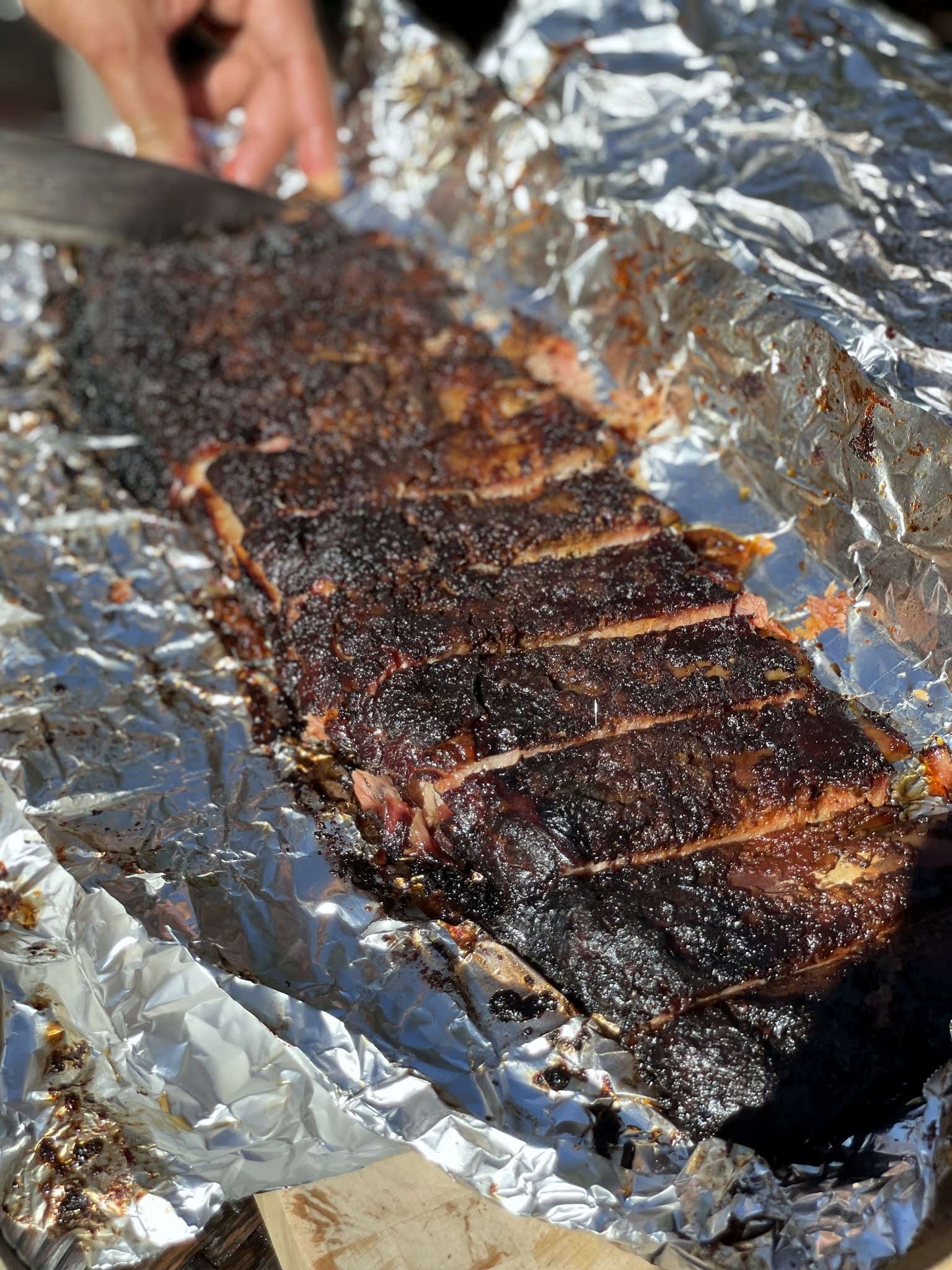
The thirteen chapters of the book = as many recipes, each a different course. After a long 2020 of minimal social contact, we had our first party to inaugurate return to life as we've known it. We had friends over for a Memorial Day lunch-that-lingered-into-after-midnight and I made the Ensalada de Palmitos (Hearts of Palm salad) with the orange vinaigrette rather than the salsa golf. We had it with smoked baby back ribs and potato salad, baked beans, etc. The acid in the vinaigrette perfectly cut through the fat in the ribs and the citrus flavours brightened it all up. Definitely will be a regular!

THE WINE
Founded in 1895 by Edmund James Palmer Norton, Bodega Norton is one of the most awarded Argentine wine brands in the US. The estate has grown to over 1,750 acres of estate vineyards and over 3,000 acres of land holdings. It has been owned by Austrian businessman and entrepreneur Gernot Langes Swarovski, of the Swarovski Crystal company, since 1989. Their diverse portfolio of wines is sure to offer something for every occasion, every meal, and every cuisine.

We opened the sample of the 2019 Bodega Norton Reserva Chardonnay, which was superb with the ribs and salads, but also the snacks of spiced nuts and appetizer of grilled corn-ricotta dip with potato crisps and crudités.

The grapes for this Chardonnay come from 30 - 50 year old (mature) vines, and the wine is aged in 100% French oak for 6 months followed by 3 months in bottle before release. The wine is a pale gold colour flecked with green, and offers a complex nose and palate of ripe citrus+stone fruit, a rather faint hint of vanilla, and a long mineral-edged finish.

We almost never have wine without food but I can see this being an afternoon sipper, especially with a riveting book to keep company. I can certainly say that I enjoyed both, the wine and the book!


Sunday, February 14, 2021

RED WINES OF PROVENCE WITH THE #WINOPHILES

Source: Wine Folly/Flickr

It's already February 2021, we're in the throes of the COVID-19 pandemic, and trying our hardest to create the new normal while waiting with bated breath to return to the regular normal. Luckily, some things have remained the regular normal. Things such as our blogging community of French wine enthusiasts and professionals who meet every month for a virtual bonanza of wine. This month the #winophiles, as we are known, are exploring the red wines of Provence. When we hear wine and Provence in the same sentence we almost always think rosé wines of all shades made from grapes growing in impossibly sunny and clement weather. But Provence has more to offer than delicately coloured rosé wines and visions of lavender fields near the Mediterranean sea. Provence in fact, makes red, white, and rosé wines from a variety of grapes... something for everyone and for all foods.

Red wine grapes include varieties found throughout much of France such as Grenache, Syrah, Mourvedre, Tannat, Counoise, Cinsault, and of course, Cabernet Sauvignon, but also grapes not often seen elsewhere like Folle Noir (a favourite!), Calitour, Tibouren, Barbaroux, and Braquet. All in all about 36 grape varieties are allowed in Provence spanning a few different countries including Spain and Italy, although in Provence they are generally known by their French/Provençal names.

Provence has 9 viticultural regions or AOCs (Appellation de’Origin Contrôlée). Among those, the ones known for red wine are Bandol (arguably the most famous Provençal red wine AOC), Baux de Provence, Palette, Bellett, and the newest AOC (since 1998), Pierrevert. Provence red wines, although not as known as their sublime coloured siblings, the rosés, are in fact as serious a series of wines as any other.

Provençal reds are complex, exceptionally food friendly, and cellar-worthy for years. One of my favourite pairings is lamb cooked with an elaborate mix of spices... it works hand-in-glove with the best of garrigue-laden Provence reds. Have I convinced you yet to visit, revisit, and dive into Provençal red wine offerings? Grab a bottle or two of your choice and explore with us on Twitter on 20 February 2021 at 8 AM PST under the hashtag #winophiles to talk about all things Provence red wines. To inspire you, here's a snippet of what you can expect from some of us:
  • Lynn over at https://savortheharvest.com/ has for us "Winning Red Wines from Provence with Lamb Meatballs: Domaine Hauvette and Clos Cibonne"
  • Susannah from https://avvinare.com/ is telling us how "Beef stew and A Glass of Bandol Rouge Warms the Heart"

Saturday, September 21, 2019

CORSICA: THE MAQUIS, THE MOUNTAINS, THE SEA (#winophiles)


This month the French #winophiles are in Corsica, France. The small island - or what seems like a large mountain - in the Western part of the Mediterranean sea, sitting squarely across the water from Italy and France, with an inevitable political and cultural history of occupation by both. Although it has been a part of France for the last 250 years, Corsica was Italian (or, Genoese which is now Italian) for centuries before that and retains much of the language, culture, and proclivities from that time as well as its own identity formed from centuries of exposure to a whole slew of other cultures including Greek, Roman, and Moorish. Corsica also has the distinction of continuous human occupation since the Mesolithic era. That's the era 15,000 to 5,000 years Before Present (BP). I.e. a really long time ago.

SOIL, GEOLOGY
But not as long as 225 M years, which is how long ago some of the mountains on Corsica formed during one of Earth's geological periods called "mountain-building periods" when the earth, oceans, and tectonic plates shifted, collided, crumbled, layered, and pushed, resulting in mountains of various sizes. Although Corsica looks like one large mountain range, and little else, it's actually two large mountain ranges and little else. Islands conjure images of beaches, tanned bodies, etc. Not Corsica. As you can see in the NASA image below, nothing looks like a beach there, just mountain. Two distinctly different but rugged mountain ranges run N-S along the length of the island. The western range is volcanic/igneous rock, mainly granite, and the eastern range is sedimentary and metamorphic rock including limestone, schist, slate, flint, etc. that usually forms in compacted layers on the seabed.


Incidentally, the rocky soil in both of Corsica's mountain ranges is suitable for grapevines. E.g. the granitic soil of the western range allows high acidity in grapes, whereas the slate in the eastern range absorbs and reflects heat, helping to ripen grapes. Schist retains heat well, producing wines with rich minerality and limestone helps vines with nutrient and water uptake and also yields grapes and wines with bright acidity. And indeed wine-making has existed in Corsica since centuries ago when the Greeks introduced vitis vinifera to Corsica, although it has not always flourished. The most recent effort to organise the Corsican wine industry started in the 1960s with the first AOC being established in 1968. Now there are nine AOCs and a variety of grapes are used including Italian varieties. Some grapes are known there by their Italian names rather than French, such as Vermentino/Vermentinu rather than Rolle.

Image from NASA
FOOD, STORY

Along with a long history comes a strong culinary presence as well. Apart from its association with famous figures like Napoleon Bonaparte (who was from a family of Corsican vintners) and Roman philosopher Seneca (who was exiled there), Corsica is known for its candied fruit, pigs fed with wild herbs (maquis) and chestnuts, various charcuterie, seafood, and the unbelievable casgiu merzu, a maggot/larvae-filled cheese made by leaving whole tommes in air to allow flies to lay eggs... you can imagine the rest. It's unbelievable that someone would do that to a tomme. And it's unbelievable that it's a very expensive product. If you've read Asterix in Corsica, you know this cheese and its effect on unsuspecting non-Corsicans! If you haven't read Asterix in Corsica, see the photo above!


WINES


We chose one red and one white from Domaine Vico's Clos Venturi, Vin de Corse AOC which is an island-wide designation. Jean Vico, whose family produced wines for several generations, originally planted the domaine’s vineyards in 1901. In 1987 Jean-Marc Venturi purchased the property, replanted some of the vineyards and began improving the quality of the wine. At the end of the nineties, Emmanuel Venturi began working with his dad after studying winemaking on the island and doing some internships abroad. Domaine Vico covers 46 hectares, planted with local varieties Vermentinu, Niellucciu and Sciaccarellu, along with Grenache and Syrah. The vineyards complex soils contain schist, small rocks and sand, as well as some volcanic sediment, and the vines are planted at 300 - 400 m. After working the vineyards sustainably for 35 years, the domaine was awarded the HVE (High Environmental Value) certification in 2015 and has been in organic and biodynamic conversion since 2017.


2017 Clos Venturi White Wine, 13.5% ABV
100% Vermentinu (Rolle) | SRP $18
From the label: "Clos Venturi is not only the furthest Corsican winery from the sea, but also the highest with vineyards at 400 m (1312 ft). The grapes are planted on granite soil, hand-harvested, and aged in wood, clay, and concrete barrels and tanks."


The wine is deep lemon with aromas of lemon rind, white flowers, and faint honeysuckle. On the palate it has ripe lemon, lemon rind, quince, quinine, and faint honeysuckle in the back, with a sprightly acidity. The finish is medium. A delightful wine for a sunny day, salt cod brandade, and sea urchin bruschette!

2015 Clos Venturi Chiesa Nera, 14% ABV
40% Sciaccarellu, 30% Niellucciu, 10% Carcaghjolu Neru, 9% Minustellu, 4% Morescala, 3% Moresconu, 2% Aleático, and 2% Vermentinu (Rolle) SRP $36
From the label: "Chiesa Nera is a rare wine produced in very small quantities. Made with a variety of eight red and white grapes native to Corsica and aged in amphorae."


This elegant wine is medium ruby with complex aromas of blue and black fruit, violets, and fresh roses. On the palate the wine offers notes of blueberries, violets, red roses, fraises (wild strawberries), and a faint hint of black pepper rounded out by plush but firm tannins, a silky mouthfeel and a finish tending to long. Absolutely delicious!

We enjoyed it with lamb burgers seasoned with herbs typically meant by "maquis" - oregano, basil, thyme, mint, etc. Although our herbs were not wild, they were splendid with the lamb!

See below what the other winophiles did with their Corsican wine picks!

Saturday, August 17, 2019

BASQUE-ING IN IROULÉGUY WINES AND MORE


This month in August, the French Winophiles took on the task of wines from French Basque country, which, to make a long story short, is essentially the compact AOC of Irouléguy. Why is it a task, you ask? Because at approximately 550,000 L wine produced annually from approximately 210 ha of vineyards, Irouléguy is small.

Image: http://www.france-sudouest.com/fr/denomination/aop-irouleguy
Jeff from Food Wine Click was our host, read his preview post here to find out more!

SOILS 
Small with a long history of wine growing and making on it's Jurassic limestone (aka oolitic or fossiliferous limestone that is studded with ancient marine fossils) and sandstone soils streaked with iron oxide, mica, silica, clay, and dolomite. As we well know, fossiliferous limestone is basic (higher than 7 pH) and particularly helpful for nutrient uptake in grapevines and cation exchange which occurs at the root level through root hairs. Dolomite, composed of calcium magnesium carbonate is a source of magnesium that vines also need along with potassium, calcium, and sodium. So in summary, the region is small but packs a punch soil-wise. Thanks Pyrenees mountains, for ardently prepping for what was to come!

STORY
As far back as the 11th century, spurred by pilgrimage traffic on the coastal journey to Santiago de Compostela in Spain across the Pyrenees, the first vineyards and wines were the work of monks, although wine making records exist from the 3rd century when the Romans were everywhere. Thanks to politics and phylloxera, once the monks had to give over winemaking control to the villagers, quality took a hit and by the 1950s only about 70 ha of land was used for vineyards. Eventually, the local wine industry organised and in 1970 Irouléguy was granted AOC status. Since then it's been on an upswing although production is still small compared to more well known wine areas like Alsace (100+ M L annually).

Irouléguy, located in southwest France bordering Spain (with its own Basque country), produces mainly red wines, with whites and rosés done in far smaller quantities. Red grape varieties include Bordelesa Beltza (Tannat), Axeria (Cabernet Franc) and Axeria Handia (Cabernet Sauvignon). White wines are made from Xuri Zerratia (Courbu), Izkiriota Ttipia (Petit Manseng) and Izkiriota (Gros Manseng) - grapes also used in Jurançon AOC.

NOT JUST IROULÉGUY HERE
Since Irouléguy is small and the wines can be hard to find in the US, the Winophiles' border generously extended to include wines from Jurançon AOC as well. Jurançon AOC is white wines only, made from Gros Manseng, Petit Manseng, Camaralet, and Courbu grapes. Petit Manseng wines are not ones you'll see frequently and when you do see them you'll notice that they're pricey. Gros Manseng wines, on the other hand, are easy to find and often blends with camaralet (aka Petit Camarau) or other grapes. The wines are quite fresh and delightful with tropical fruit notes, especially welcome on a hot summer's day.

With all that lowdown on things, let's get into our wines!

2017 Domaine Cauhapé Jurançon Sec "Chant des Vignes", 14% ABV
Sample | SRP $20
This wine is a long-time favourite and I had a 2017 sample in the cellar that was begging to be opened. 60% Gros Manseng and 40% Camaralet grapes are crushed and destemmed then macerated on skins for 12 hours followed by press. The wine is cool-fermented in stainless steel and matured on lees for 5 months before bottling. After that, you have a wine that has beautiful fruity notes - on the nose and palate - of citrus, white flowers, fennel, faint spice, and just-ripe pineapple. Crisp and high acid, this wine lingers on the palate for what seems like forever and no one is complaining!


We enjoyed it with samosa chaat: samosas filled with seasoned potatoes and peas and fried, layered with tamarind chutney, coriander chutney, and a drizzle of creamy yogurt then finished with a garnish of shallots, fresh coriander, red chili powder, chaat masala, and a light dash of crispy chickpea flour snacks. While all of this overall has a layered complexity of flavours, it was an incredible complement to the wine! Especially the sweetness and acidity of the tamarind chutney.

2006 Domaine Arretxea "Cuvée Haitza", biodynamic, 12.5% ABV
$50

Domaine Arretxea began on leased land and is now a top estate of Irouléguy. It was always organic but is now also certified biodynamic. The grapes are harvested by hand, sorted in the vineyard and in the winery, after de-stemming are transferred by gravity, and vinified separately using natural fermentation. Maceration is 3 to 4 weeks with daily punch-downs and aging is 16 months on the lees in foudre and 400 to 600 L demi-muids.

Pitch black and stunning out of the bottle, this wine is a blend of 70% Tannat and 30% Cabernet Sauvignon. It could easily be laid down for another 5 years but is very drinkable now. The grapevines have clearly seen some warmth because it's juicy, fruity, and has a layer of baking spice in the background. Although straight from the bottle it has high tannin and strong wild fruit on the palate. After about an hour it mellows to a more approachable wine with red flowers, peppercorns, baking spices, and a welcome meatiness. At 12.5% abv it's not an overpowering wine despite the tannat and cabernet blend. Also soft but very present tannins and medium acidity that beg for food, rounded out by a medium finish.

We enjoyed this wine over two days, paired with two different things: bbq pork on day one, and falafel, hummus, green pea smash, and garnishes on the next day. It was splendid with both! Having it with bbq pork on the first day when it had been opened for just over an hour was perfect because the meatiness and spice in the pork and wine worked beautifully. The following day the wine was not as out of control and was fruitier on the palate, which made it lovely to have with our equally staid plate of falafel etc. All in all, a delicious wine that most definitely needs food to rein it in!

See you all next month for our exploration of wines from the island of Corsica! In the meantime, see the links below to find out what our fellow #winophiles are saying about the wines they chose!