Showing posts with label dairy-free. Show all posts

Monday, February 13, 2017

CHOCOLATE ALMOND CANTUCCI (BISCOTTI)


Adapted from Alice Waters' The Art of Simple Food, one of my favourite American cookery books.

Cantucci are made to last a long time so the dough has no perishable fats that could go rancid (oil, butter, etc.), so if anyone is trying to pass off cantucci containing any fat other than eggs, they're not cantucci! These are also known as biscotti (biscuits) outside Italy/Europe. But really, they're a specific biscotti from Prato. Regardless, they come together in no time and are very versatile... delicious with pine nuts or any other nut, raisins, chocolate shavings, etc.

They're supposed to be very dry, and are usually enjoyed dipped into coffee or a sweet dessert wine - traditionally Vin Santo -  when they soften a bit, making them bite-able.

Chocolate Almond Cantucci (Biscotti)
Makes 2-3 dozen biscuits, depending on the size of the loaf and thickness of slices


- 2 cups sliced almonds
- 1-3/4 cups unbleached all-purpose flour
- 1/2 cup cocoa powder (unsweetened)
- 1 tsp baking powder
- 1 tsp salt
- 1 tbsp almond or vanilla extract
- 3 eggs, room temperature
- 1 cup sugar
- 2 tsp citrus zest (lemon or any type of orange)

  1. Preheat the oven to 350 F/175 C. Spread the sliced almonds on a baking sheet and toast in the oven until just fragrant, about 7 min.
  2. In a large bowl beat the eggs, sugar, vanilla (or almond) extract, and zest until the mixture falls in a nice ribbon (3-4 min.).
  3. Mix in the flour, cocoa powder, baking powder, and salt, and fold the almonds into the dough (it will be a very stiff batter rather than a dough).
  4. On a baking sheet lined with parchment paper, divide the dough into two portions. Shape into 3-4 in. wide logs using moistened hands so it doesn't stick. The dough will spread a bit so space logs at least 3-4 in. apart. Re-moisten hands as needed and smoothen out any lumps or unevenness in the logs.
  5. Bake until just firm, 25-30 min. Remove from the oven and cool for 10-15 min. (If baked or cooled for too long the logs might harden, making it difficult to slice them so do keep and eye on the time).
  6. Reduce the oven temperature to 300 F/150 C.
  7. Remove each cooled log from the parchment and set on a cutting board. Using a serrated knife, cut log into diagonal slices, about 1/2 in. thick  Lay the slices on the baking sheet - they can be quite close together, don't need to be spaced (use two baking sheets if needed, although I have never needed to do that).
  8. Bake cut cantucci for 10 min., then flip onto the other side and bake another 10-15 minutes until crisp.
  9. Enjoy with a coffee, espresso, or a dessert wine. The crumbs from cutting the biscuits are terrific on ice-cream! 


Wednesday, August 6, 2014

VEGAN OVERNIGHT OATS


Overnight oats - one of my favourite breakfasts! It's sattvic, light but really filling, quick, make-ahead, and if you put these in a jar with a lid, spill-free and portable. I also make these in my hotel room when I'm travelling, to have an energising breakfast before the activity of a construction site.

I seldom eat dairy products, but if you do, you can make these with milk if you want. Milk's not really necessary though... overnight the oats the mixture gets creamy and smooth just with water. I also don't use any processed milk like almond or soy. If you make homemade nut milk, by all means use that, it's delicious!

Also, since I don't use any dairy in these, I just leave them on the table. I find the chill of refrigerated breakfast too much of a shock early in the morning, even in the summer. But if you're using milk, do refrigerate!

Use any fruits and nuts you fancy. Bananas, berries, stone fruit like cherries and peaches, kiwi, mangoes, pineapple, passion fruit... they're all amazing with these oats.

Vegan Overnight Oats
makes: 1 serving

- 1/4 cup rolled oats (regular, not instant!)
- 1 tbsp. shredded coconut (optional)
- 1/3 cup water
- 1 cup champagne grapes (or halved regular grapes or any other cut fruit)
- 2 tbsp. toasted pumpkin seeds, coarsely chopped (or any other nuts)
  1. In a bowl, mix the oats, water, and coconut if using. Stir well and set aside for 10-15 minutes. Stir again, and if the oats seem dry, add a bit more water till you have a creamy mixture.
  2. In a jar or glass, layer the oats, pumpkin seeds, grapes, repeat. End up with a top layer of grapes.
  3. Leave overnight and enjoy a delicious start to your day!

Friday, August 1, 2014

SPROUTED RICE AND VEGETABLE LAVER (SEAWEED) ROLLS


A gluten-free, quick, and light meal that also makes an excellent snack! I did not photograph anything until after I finished rolling everything, so I drew an illustration - hopefully it helps! - to show the arrangement of rice and vegetables (or fish, if you want) on the laver.


Sprouted Rice and Vegetable Laver (Seaweed) Rolls
makes: 2 rolls, 12 - 16 pieces

- chipotle cashew cream sauce, for dipping
- 1 cup cooked sprouted brown rice (or any cooked white rice, as long as it's sticky)
- 1 tbsp. apple cider vinegar (or rice wine vinegar)
- 1 tsp. sugar
- 1 tsp. salt 

- 1 grated carrot
- 1 julienned cucumber
- 1 julienned jalapeño (deseed if you want no spice)
- 2 leaves of romaine lettuce, middle vein removed (otherwise the laver will break)
- 2 sheets laver (aka nori, easily found in any Japanese or Korean store or Whole Foods)
- 1 tbsp. toasted sesame seeds (raw sesame seeds are ok as well)
- 2 tbsp. water in a small container

  1. In a bowl, mix the rice, vinegar, salt, and sugar. Arrange the prepared vegetables on a plate within easy reach. Toast the laver by quickly passing each sheet over a low flame - you may need to do this a couple of times to cover a maximum area of each sheet, corners and all, but without scorching the laver. So move swiftly and don't let any one area of the laver dwell over the flame for too long.
  2. Place a sheet of laver on a cutting board or other flat surface and spread half of the rice from the bottom edge to about 1 - 1-1/2 in. short of the top edge (see the illustration above), and arrange half of the vegetables on the rice in this order: lettuce, carrot, cucumber, jalapeno. Sprinkle with half of the sesame seeds. 
  3. Lift the bottom edge of the laver and roll everything into a tight roll. When you reach the bare (riceless) end of the laver, dip a finger in water and lightly wet the edge of the laver and finish rolling. The water will help the laver stick so the roll remains closed and doesn't unravel.
  4. Cut each roll into 6 - 8 pieces and serve with this cashew cream sauce, or your favourite sauce. Store leftovers in the fridge for up to one day.

Monday, July 14, 2014

CULTURED CASHEW SPREAD OR "CHEESE"


This was my first attempt at a cashew "cheese". It seems like it takes a while, but it really doesn't. Most of the time it takes is passive - waiting time - soaking the cashews, culturing  and draining the blended cashews, letting the drained mix mature in the fridge before eating, etc. I think it's totally worth it and I don't mind planning ahead a little. In fact, I will add this to my standby dips and spreads that usually I have at hand in the fridge or freezer: sprouted lentil dip, hummus, roasted red pepper dip, roasted aubergine dip (baba ghanouj/mutabbal), and avocado carrot dip. All of these freeze really well and are terrific when you want a bit of a snack before dinner - or as dinner. I also have any one of these in the office fridge when I know I'll be in office for a few days in a row.

Although this cashew "cheese" makes a great addition to a cheese plate, and was all gone by the end of the evening, I am not sure I'd call it cheese... feels a bit gimmicky. I think perhaps cultured cashew spread or paté is more appropriate. Regardless, I'll be making this much more often, with a couple of changes to make it more firm textured.

Mine had more of a spread-like consistency, probably because I used cashew halves, which absorb more water compared to whole cashews. Also likely because of that, I didn't need to use much water during blending. Taste-wise it was a winner though... next time I'll be sure to hang it to drain rather than setting it over paper towels in a bowl. Use glass containers, not plastic, because plastic absorbs odours and is more prone to fungus - that's going to waste all the effort you've put into making this!


Cultured Cashew Spread, or "Cheese"
makes: two 3 in. x 1-1/2 in. rounds

- 1 cup cashew halves, soaked for 8 - 12 hours
- 1-1/2 tsp. probiotics (I used Yogo non-dairy yogurt starter)
- 1-1/2 tsp. salt
- 1-2 tbsp. water
- fresh or dried herbs/spices (I used fresh cilantro on one round and crushed peppercorns, dried rosemary, and thyme on the other)
  1. Blend the soaked cashews with probiotics until very smooth... like buttercream frosting. If needed during blending, add water 1 tbsp. at a time but try to blend using minimum water. The soaked cashew halves should have absorbed plenty of water already.
  2. Transfer to a glass bowl lined with 3 - 4 layers of paper towels and let it culture in a warm draft-free place for 24 hours (I put it in the oven - while it's off, of course!).
  3. After it's cultured, line 2 ramekins with plastic wrap and arrange your herbs on the bottom. Divide the cultured cashew mix between the ramekins and cover loosely with plastic wrap. Let it mature in the fridge for at least 24 hours, and up to 2 weeks, before serving.
  4. To serve: lift the plastic with the cheese from the ramekin and invert onto a plate or cheese tray and discard the plastic. Serve with fresh fruit and crackers or crostini.

Sunday, July 6, 2014

TACOS: CACTUS AND ROASTED POBLANO CHILES (NOPALES Y RAJAS POBLANAS)


Rajas poblanas (RRAa-has poblanas) are strips of roasted chile poblano (photo below), which range from mild to spicy. I love having the smoky flavour of the roasted chile and the surprise spice in a random bite of a taco! They're a classic in tacos but equally fantastic mixed in with beans, added to soups, as a filling for enchiladas/enfrijoladas/enguacatadas, on salads, nachos, on the side with eggs, in an omelette, or in sandwiches.


Fresh unripe poblanos are a deep gorgeous green, and turn into a fiery red when they ripen. Dried poblanos are called chile ancho, and are ubiquitous in most Mexican moles. Rajas poblanas is also a Mexican dish made with chile poblano rajas mixed with crema (Mexican sour cream), onions, and sometimes chicken. It's slightly rich, but one of my favourite Mexican dishes. In addition to tinga, posole, chile colorado, alambres, and all my other Mexican favourites!


Nopales, or cactus, is a very common ingredient in Mexican cuisine. In any good Mexican market you'll find either whole cactus paddles with thorns that you take home and clean and trim yourself, or bags of cleaned, trimmed, and diced cactus ready to cook. I usually get the cleaned and diced cactus because it's a time saver. Cactus can be cooked diced or  the whole cleaned and trimmed paddle can be roasted/grilled. And along with whole roasted jalapeños and spring onions, it's an excellent accompaniment to steak!


Tacos: Cactus and Roasted Poblano Chiles (Nopales y Rajas Poblanas)
makes: 6 tacos

- 1/2 cup salsa: salsa verde (recipe here and here) or roasted tomato salsa
- 2 cups cleaned and diced cactus
- 1 chile poblano, washed
- 1/2 medium onion, diced
- 2 cloves garlic, minced
- 1 tbsp. olive oil
- 2 tsp. salt
- 12 small corn tortillas (ask the store for tortillas for tacos, which are smaller)
- 8-10 sprigs cilantro (1/4 cup coarsely chopped)
- 1/4 cup finely shredded purple cabbage (or red or green cabbage)
- 1 lime, cut into wedges

Optional garnishes: finely shredded carrots, sliced avocado, onions, jalapeno, pickled vegetables "en escabeche"

  1. Cook the cactus: Bring water to a rolling boil in a large pan. Add the cactus and boil for about 15 minutes, or till the cactus is soft. Don't overcook the cactus till its mushy or you'll have a panful of slimy green pieces! Drain the cooked cactus and set aside. 
  2. While the cactus is boiling, roast the chile poblano over an open flame or in a cast-iron pan until its charred on all sides. Remove from the heat and put it in a covered bowl for 15 minutes. Remove the charred and softened skin, rinsing off any residue. Cut the chile into half and discard the seeds. Cut the roasted chile into strips - "rajas" in Spanish. 
  3. In a pan, heat the olive oil and add the onion and garlic. Sauté until translucent then add the cooked cactus and salt. Sauté for a few minutes till heated through. 
  4. Transfer the chile poblano strips (rajas) and cactus into serving bowls. Arrange the cabbage, cilantro, and any optional garnishes in a platter. Warm the tortillas. 
  5. Assemble the tacos: divide the tortillas among plates, stacking 2 per taco. Top with the rajas and cactus, cilantro, and cabbage. Drizzle 1 tbsp. each of the chipotle cashew cream sauce and salsa on each taco. 
  6. Serve immediately with a wedge of lime, additional salsa, cashew cream sauce, and optional garnishes.

Wednesday, July 2, 2014

CHIPOTLE CASHEW CREAM SAUCE: CAN'T EAT DAIRY, NO PROBLEM!


Roasting brings out the nutty flavour in cashews, but raw cashew nuts are mild and take flavours so well that they create the most creamy and delicious dairy-substitutes I've had! Whether it's cultured cashew cheese, cinnamon and nutmeg laced cream to top your fruits, or this delicious and smoky chipotle sauce that goes with oven-baked "fries", stirred into soups, and with Mexican food like tacos.


Chipotle Cashew Cream Sauce
makes: 16 oz.

- 1/2 cup raw cashew pieces (~3/4 cup raw whole cashews)
- 1 medium clove garlic, peeled
- 1/2 lemon
- 1 tsp. salt
- 1 tbsp. chipotle powder
- 1 tsp. crushed red pepper
- 1 tbsp. nutritional yeast
- 3/4 cup water
  1. Soak the cashews for 30 min. - 8 hrs. in enough water to fully submerge them.
  2. Drain the cashews and discard the soaking water.
  3. Put all the ingredients in a blender jar in the order they are listed above.
  4. Blend into a creamy sauce, adding more water if needed to get a sauc-y consistency.
  5. Store in the fridge for up to 2 weeks.

Thursday, June 26, 2014

SPICY ROASTED TOMATO AND CHILE SALSA: SALSA QUEMADA


Burnt (roasted) salsa. Or salsa quemada (kay-maada), in Spanish.

If you know me, you know my vast love for Mexican food. It's endless and untiring. Combined with my equally endless and untiring love for spicy sauces and condiments it means you're sure to find a slew of dips, sauces, salsas, and pestos in my fridge at any time! I love making salsas because they're so flavourful and versatile - they go with everything. I usually have a couple of different types in the fridge - they're great when I want to put together a quick rice and bean bowl with roasted vegetables for lunch or a couple of tacos for dinner when I'm famished. 


This salsa, like most salsas, is very easy to make and tastes better the longer it sits. It's great with chips, tacos, on a bowl of beans and rice, roasted vegetables, eggs, steak, chicken, with hot fresh corn tortillas, empanadas, pretty much anything... so dig in!


Spicy Roasted Tomato and Chile Salsa: Salsa Quemada
makes: ~ 2 cups

- 8 chiles de arbol
- 2 chiles guajillos
- 4 - 5 ripe Roma tomatoes
- 1/2 white onion
- 3 cloves garlic, unpeeled
- 1/4 bunch cilantro
- 1/2 lime, juiced
- salt, to taste
- 3/4 cup hot water
  1. Toast the chiles briefly in a a cast-iron or other skillet over medium-low heat until they're aromatic and slightly change colour. This should only take a minute or less... try not to blacken them — burnt chiles add an unpleasant bitterness to the salsa. Transfer the toasted chiles into a bowl and cover them with hot water. Let them sit while you roast the rest of the vegetables.
  2. Turn the heat to medium and put the tomatoes, garlic, and onion (cut side down) into the skillet. Turn the vegetables every few minutes to roast them evenly.
  3. Remove the garlic when it has a few brown spots. Remove the onion when it's nicely charred on the cut side, and slightly softened. Let the tomatoes roast until they're soft and blackened in spots. The skin will start to peel and the tomatoes may crack slightly and release some juices. It's ok.
  4. Turn off the heat and let the tomatoes cool. Remove any loose or blackened skin - it should come off easily. Peel the garlic, cut the onion into 2 - 3 chunks. Drain the water from the chiles.
  5. Add the chiles, tomatoes, garlic, onion, cilantro, salt, and lime juice to a blender and pulse until smooth. Adjust salt to taste before serving.
  6. Serve at room temperature or store in the fridge for a week. If it lasts that long!

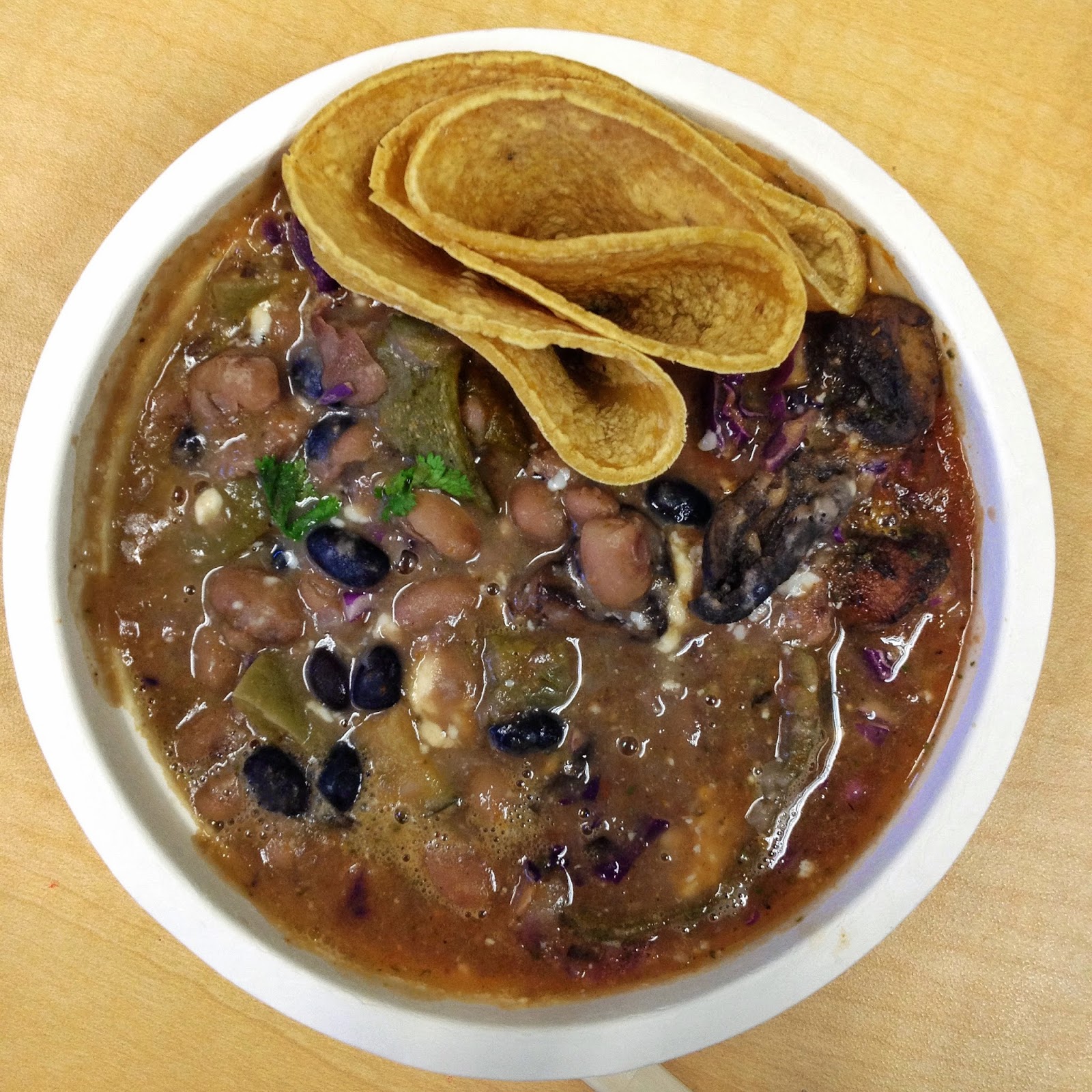
MEXICAN BEANS: FRIJOLES DE OLLA


Frijoles de olla: free-HOLays de Oyya

An olla is a clay pot used for cooking soups, stews, and beans in Mexico. For these beans you can use a regular deep stockpot or Dutch oven or the faster way that I use: a pressure cooker. Traditionally, beans are also cooked with lard but I never have lard at home and I don't want to buy some just for the beans. So I cook them in oil and they're just fine. If I were using bacon for something, I'd render fat from bacon and use that and the beans would have a mind-blowing lard-y flavour. If you have good real lard in your kitchen, definitely use that to cook these beans!


The beans are not only a side dish, but can be used for so many other dishes: enfrijoladas, borracho or "drunken" beans, ranch-style beans, refried beans, bean soup, and on top of rice or nachos.


In the north and central parts of the country, pinto beans are popular, whereas black beans are more commonly served in the south. I had a bit of both, so I mixed them and I love the outcome.


Mexican Beans: Frijoles de Olla

makes: 8 - 10 servings


- 2 cups dried pinto beans, soaked overnight and drained 
- 1 cup black beans, soaked overnight and drained
- 1 medium white onion, peeled and chopped 
- 2 large garlic cloves, peeled and chopped 
- 2 tablespoons olive or vegetable oil
- 2 sprigs epazote (optional) 
- enough water to cover the beans by 1 inch 
- salt to taste

Garnishes: chopped onions, crumbled cotija cheese, sliced jalapeños, serranos, or chiles de arbol, chopped cilantro, lime wedges, chopped cabbage
  1. Place the beans in the pressure cooker with the onion, garlic, oil, epazote and water. Do not add salt until the beans have finished cooking. Cover and pressure cook until done. Add salt to taste.
  2. Transfer the beans to a serving bowl. Set out the garnishes on the table so each person can garnish to taste.

Saturday, June 14, 2014

SPANISH OMELETTE: TORTILLA DE PATATAS (TORTILLA ESPANOLA)


Eggs, potatoes, onions: what's not to love?! I love this easy-to-make and easy-to-eat Spanish omelette. It's a classic tapas dish, served at room temperature and cut into batons, bite-sized pieces, or wedges. It's also terrific for brunch, breakfast, or a snack. Or any time you want, really.

If you look online, you'll find a ton of information on the nuances of this omelette, including the use of mad amounts of oil to crisp up the potatoes and etc. etc. Well, it's really unnecessary to glorify what is really just simple pub grub made with simple ingredients. I had a boyfriend from Zamora, Spain, and he made this often for us - minus any fuss or needless snoot.


This omelette or potato "cake" is not related at all to the Mexican corn tortilla. And why not? Well, the explanation is quite simple really. Torta in Spanish means cake. Tortilla is the diminutive of that, and means small cake. So anything that sort of resembles a small cake is a tortilla. Although they're all called tortillas, handmade corn tortillas are considerably thicker than the thin machine-made ones we buy in stores, and can easily be thought of as small cakes.


I made this with purple potatoes because I love the colour, but any potato that's not too starchy will do. I like adding a bit of garlic and some kind of pepper to this omelette: toasted black pepper, paprika, smoked paprika, crushed red pepper, finely chopped jalapeños or other green chiles. They all work really well with the other ingredients. Sometimes I stir in a couple of tablespoons of finely minced parsley as well. You can add a bit of chopped ham or sausage too.

Two things I do to develop a nice texture and flavour, and to keep the eggs from sticking  to the pan are:

  • Add the cooled potatoes and onions to the eggs and let everything soak for 15 min. or so before adding to the hot pan. This is optional, but it develops the texture and flavour really nicely.
  • Add the egg, potato, onion mixture to a hot pan, then turn the heat down after a minute or so of cooking. This prevents the eggs from getting stuck to the pan.


Spanish Omelette: Tortilla de patatas (Tortilla española)
Makes: 1 12 in. omelette

- 6 eggs
- 3 potatoes, sliced or cubed (any waxy kind, not starchy like Russet)
- 1/2 large onion, sliced
- 3 cloves garlic, minced
- 2 chiles de arbol or 1 jalapeño, finely chopped (optional)
- 2 tsp. salt
- 1 tbsp. freshly ground pepper
- 3 tbsp. olive oil
  1. Heat 1 tbsp. of oil on medium heat and sauté the onion until translucent. Add the potatoes and sauté for a few minutes, add 3-4 tbsp. water and cover. Cook for 7-10 minutes or until the potatoes are cooked. Cool.
  2. In a large bowl, whisk the eggs. Add the salt, pepper, garlic, chiles, and cooled potatoes and onions. Add the chopped herbs if using. Gently fold everything together to mix and let it soak for 15 minutes.
  3. Heat the remaining 2 tbsp. oil on high heat in an omelette pan or skillet that has 1 - 2 in. tall sides. Pour in the egg mixture and quickly even it out if the potatoes are mounding in the centre. Cook for 1 - 2 minutes and turn the heat down to medium-low. Cook until the omelette is almost set and the sides somewhat shrink away from the pan. Shake the pan to loosen the omelette - if the omelette doesn't move freely in the pan, slide a spatula under the omelette and loosen it. 
  4. Put a plate, eating side down, over the pan. Invert the pan so the tortilla flips on to the plate. Slide the tortilla back into the pan and top off with any uncooked egg mixture in the plate. Cook for about 5 minutes but not much longer or it will overcook.
  5. In the same way as step 4 above, flip the omelette back on to a serving plate or cutting board.
  6. Serve warm or at room temperature by itself, over a salad, with bread, a bit of ham or Spanish chorizo.

Friday, May 2, 2014

MILLET WITH DANDELION PESTO AND ROASTED VEGETABLES: GLUTEN-FREE


Millet is an ancient grain high in protein, essential nutrients, and heart-healthy soluble fibre. I really love millet - the whole grain and flour both. In addition to being gluten-free, Ayurvedically, millet is sweet, dry, light, and rajasic/sattvic. I.e. it won't contribute to mucous formation and heaviness in the body that grains like wheat do. Millet is a mild goitrogen though, so if you have thyroid problems, avoid eating it every day. I generally don't eat any grain everyday or for a number of days in a row. I like to vary the grains I eat, and also throw in some grain-free days a couple of times a week. In general, apart from unfermented soy, I don't exclude any bean, grain, or legume from my diet.

I also don't subscribe to food trends - like quinoa. Not that quinoa is bad, but I don't like its taste, texture, appearance, and effect on my body, and although I don't yet know it, there must be a reason why my body doesn't like quinoa. Over the years I've learnt to listen to my body - it tells me things for a reason, and it's always been right. As an aside, quinoa and millet both have high protein content and are nutritionally comparable.

Soaking grains helps neutralise phytic acid which can interfere with the absorption of nutrients in the body. Although millet has among the lowest phytate content, it's still good practice to soak it and neutralise the little phytate content it has. Toasting isn't essential but it brings out a delicious nuttiness in the millet - if you don't have time to toast, just soak the millet and carry on with the recipe.


Rutabagas are a member of the cruciferous family, as evidenced by the slightly sulfuric cabbage-y smell when you cut into one. Also like cruciferous vegetables, rutabaga can be eaten raw but when cooked it develops a wonderful hint of sweetness that I really love! It's a terrific complement to roasted sweet potatoes, potatoes, and carrots.

And dandelions... as I've said before, they're dismissed off as weeds but really are quite an excellent and nutritious green. I really love the mild bitterness of the dandelion and in spring when they're in season, I have them quite regularly in my smoothies and sautéed as a green. The dandelion pesto lasts forever in the freezer - I make a large batch then freeze in a couple of smaller containers and use as a sandwich spread, on eggs, in a rice salad, on salmon, pasta... just like any other pesto. 


Millet with Dandelion Pesto and Roasted Vegetables
makes: 4 - 6 servings (1-1/2 - 1 cups per serving)

Millet:
- 1/2 cup dandelion pesto
- 1 cup millet, toasted in a pan and soaked for 8 - 24 hours
- 2-1/2 cups water
- 1 shallot, sliced (or small red onion)
- 3 cloves garlic
- 1 capsicum, diced (any colour)
- 1 tbsp. caraway seeds
- 1 tbsp. coconut oil
- 1/4 cup chopped cilantro (or parsley)
- salt, to taste
- freshly ground black pepper, to taste

Roasted Vegetables:
- 1 medium sweet potato, cut into chunks
- 2 medium potatoes, cut into chunks
- 2 medium carrots, cut into chunks
- 1 medium rutabaga, peeled and cut into chunks
- 1 cup cherry tomatoes
- 2 cups cauliflower florets
- 1 medium zucchini, cut into chunks
- 1 tbsp. cumin seeds
- salt, to taste
- freshly ground black pepper, to taste
- 2 tbsp. coconut oil

  1. Preheat the oven to 425 F/220 C.
  2. Roast the vegetables: in a large bowl toss the sweet potato, potatoes, carrots, and rutabaga with 1 tbsp. coconut oil, 1/2 tbsp. cumin seeds, salt, and pepper. Grease a baking sheet with 1/2 tbsp. coconut oil and spread the vegetables on it in a single layer. Roast for 20 - 25 minutes or until cooked (the rutabaga won't become soft like potatoes will, but it's fine because rutabaga can even be eaten raw).
  3. In the same bowl used for tossing the root vegetables, toss the cauliflower, tomatoes, and zucchini with the remaining 1/2 tbsp. coconut oil, 1/2 tbsp. cumin seeds, salt, and pepper.
  4. Remove the roasted root vegetables from the oven and transfer to a clean bowl. In the same baking tray, spread the tomatoes, cauliflower and zucchini in a single layer and roast at 400 F/200 C for 15 - 20 minutes or until the cauliflower is just cooked - it should not be mushy. Remove from the oven and add to the bowl with the root vegetables. Turn the oven off.
  5. Cook the millet: While the vegetables are roasting, bring the 2-1/2 cups water to a rolling boil in a saucepan and add the millet. Give it a quick stir and continue to boil for 3-5 minutes. Turn the heat down to low, cover the pan and cook for another 15 minutes or until the millet is soft and fully cooked.
  6. While the millet is cooking, heat the coconut oil in a deep skillet or wide pan on medium, and add the caraway seeds. When the seeds start to sizzle, add the shallot, garlic, and capsicum and stir. Turn the heat to low and sauté till the vegetables are a bit soft, adding 1/4 cup water if needed to keep them from sticking since we're using just 1 tbsp. oil. When the vegetables are sautéed, add in the cooked millet, dandelion pesto, and chopped cilantro, and mix. Add salt and pepper to your taste.
  7. Add the roasted vegetables and mix well before serving. (To reheat in a microwave: sprinkle a bit of water and cover the bowl then heat).

Wednesday, April 30, 2014

INFLAMMATION-REDUCING TURMERIC SMOOTHIE


It's well-known that reducing inflammation internally and topically is one of turmeric's many many salient and healing qualities. In addition to it's quality of imparting a beautiful golden hue to foods, turmeric is used in nearly all Indian savoury foods, because Indian cuisine is rooted in Ayurveda, in which turmeric is revered for it's medicinal and immunizing properties. The beneficial compound in turmeric - curcumin - is fat soluble (not water soluble), so in order to get the best of turmeric, it should be combined with a bit of fat. In my turmeric smoothies I generally add up to 1 tbsp. of hemp hearts, flax seeds, flax oil, coconut oil, or ghee (in savoury smoothies).

However, if you don't want to add fat, you'll still get plenty of Vitamin C, a water soluble compound, from fresh turmeric. So do add it to smoothies as often as you please.

In India internal and topical use of turmeric is ages old, and now it's increasingly being used in the West. When I was at university, I was working on a research project for developing artificial human tissue from the intestinal submucosa of pigs since pig mucosa is closest to human. Anyway in the course of that project I met a woman from Bristol Myers Squibb (BMS) who was delighted to tell me (since I'm Indian) that BMS is developing a turmeric-based skin care cream for reducing/removing facial hair. I was quite delighted as well, though perhaps a hair less than her. Face masks with turmeric and yogurt are commonly used in India for reducing facial hair and brightening and cooling the skin in the summer.


Sliced fresh turmeric root marinated in lemon juice and salt is also eaten as a relish in India. Generally though, when taken internally, turmeric is paired with a fat to enable assimilation of curcumin compounds. Powdered turmeric used in cooking is briefly sautéed in ghee or oil before other spices and ingredients are added. In this smoothie, I added a tsp. of hemp hearts as the fat along with raw turmeric. If you don't have hemp, you can add a tsp. of coconut, olive, or flax seed oil, or flax seeds to the smoothie.

Inflammation-Reducing Turmeric Smoothie
makes: approximately 32 oz.

- 1/2 in. turmeric root, peeled
- 1/2 in. ginger root, peeled if not organic
- 2 cucumbers, cut into chunks
- 6 stalks celery, cut into chunks
- 1/2 lemon, juiced
- 1/4 tsp. pink Himalayan salt (or uniodized sea salt)
- 1-1/2 tsp. hemp hearts (or flax, coconut, or olive oil)
2 cups romaine lettuce
- 3 cups water 

  1. In the order listed, put everything except water in a blender.
  2. Add 1 cup of water and blend to a thick smooth paste.
  3. Add the remaining water and blend to a thin-nish smoothie.
  4. Enjoy immediately or refrigerate/store away from heat and light up to 8 hours.

Sunday, April 13, 2014

FARINATA DI CECI: GLUTEN-FREE CHICKPEA FLOUR FLATBREAD


Farinata is an easy gluten-free snack typical to Liguria, Italy, that is really versatile, but really the best way to enjoy it is to not overpower it with too many ingredients. It takes all of 10 minutes to put the batter together, and another 15-20 minutes to bake, which in my book, makes it perfect for a late and light Friday night dinner with a generous glass of a crisp white.

I know what you're thinking... butttt - if you are in the mood for a lot of vegetables, have them as a salad with the farinata rather than loading up the poor batter with a load of vegetables. Typically it's either plain with just salt added or sometimes with sliced onions and pepper added to the batter or to the pan before pouring in the batter. Light toppings like sliced olives, herbs, minced garlic, minced green chile also work very well and add depth of flavour.


The flavour of olive oil and chickpea flour is amazing and while you don't have to let the batter stand for any time at all, if you do by chance have to let it sit around for a while - even as much as 12 hours or a few days - the flavour of the farinata will just get better.  I've made farinata made with 1 week old batter (photo below), and it was fantastic and much fluffier than batter that's cooked soon after mixing (photo above).


Based on Giallo Zafferano, photos, and trust in commonalities between Romance languages.

Farinata de Ceci: Gluten-Free Chickpea Flatbread
Makes: 1 12 in. farinata

- 1-1/2 cup chickpea (garbanzo bean) flour
- 1-1/2 cup water
- 1-1/2 tsp. salt
- 4 tbsp extra virgin olive oil
- 1/2 small yellow onion, thinly sliced
- 1 tbsp. freshly ground black pepper
- 1 tbsp. chopped fresh rosemary or thyme, optional
- 3 tbsp. sliced green or kalamata olives (never canned, bottled are ok in a real pinch)*

Suggested serving options: basil pesto, a smear of roasted garlic, a bit of crescenza cheese (or Tallegio or similar soft cheese)
  1. In a medium bowl, whisk the chickpea flour and 3/4 cup water together to make a smooth pasty batter. Whisk in salt, 2 tbsp. olive oil, pepper, and herbs, if using. Whisk the remaining 3/4 cup water to make a smooth batter. The batter will seem a bit thin, but that's ok.
  2. Cover and set aside for as long as possible (from a few minutes up to 12 hours at room temperature, or in the fridge for up to a week).
  3. Before baking, let the batter come to room temperature. Preheat the oven to 450 F / 230 C.
  4. Heat 2 tbsp. olive oil in a 12 in. stainless steel, cast iron, or other oven-proof skillet till it's really hot - you can tell the oil is hot enough when it flows freely in the skillet. Swirl it around to completely and evenly coat the skillet, halfway up the sides.
  5. Add the sliced onion (if using), give the pan a quick shake to make sure the onions are not stuck to the pan. Turn off the heat.
  6. Pour in the batter, add the toppings if using, and bake for 15-20 minutes, or until the farinata is firm and edges are browned.
  7. Remove the farinata from the oven and let it stand for 5 minutes. Cut it into wedges, and serve hot, warm, or at room temperature, plain or with any of the above suggested serving options.

*Notes:
  1. Skip the olives completely if that's the only olive option. The farinata will taste better without olives than with canned olives.