Showing posts with label red wine. Show all posts

Friday, September 17, 2021

EVERYDAY WINES FROM THE CÔTES DU RHONE


September is the perfect time to explore versatile wines from Côtes du Rhône (CdR) AOC. Join us #winophiles as we taste and nibble our way through the AOC. We will be talking about all things CdR on Twitter under #winophiles on Saturday, 18 September at 8 AM PDT. Check out host Wendy's post and if you have things to say, chime in on sat AM. If you just need some AM wine talk with your coffee, come and spectate. Either way, it's going to be full of interesting facts and luscious food pics so don't miss it!

Some of us got samples through our event sponsor Côtes du Rhône thanks to the coordination efforts of Jeff from Food Wine Click. As always, samples or not, our opinions remain solely ours. 

CÔTES DU RHÔNE AOC
www.winefolly.com
Wine has been produced in the Rhône since pre-Roman times and everything including wine at that time was politicised but no history lesson here, so let's talk about now. In the most simple terms, Rhône wines rank like this from bottom to top: CdR-CdR Villages-CdR named Villages-Cru. At the top the crus include heavy hitters like Côte Rôtie, Hermitage, Tavel, etc. and then we have the CdR AOC wines which some might say are basic. But they really aren't. The CdR is further broken into two subregions: méridional and septentrional.

50% of the wine produced in the Rhône valley is classified as CdR AOC. The CdR AOC makes red, white, and rosé wines with regulatory requirements dictating grape varietals and blends allowed. If I had to summarise CdR AOC wines I'd say: versatile, well-made, excellent QPR, and worth a visit.


THE WINES
I received 6 bottles of wine including wines from CdR, CdR Villages, and CdR Named Villages AOCs. Most were red, one was white, and one rosé. It was a beautiful line-up and I opened two reds. I paired one with a top sirloin steak and one with Peshawari chapli kebabs. Both were delicious with each wine.


INOPIA ROUGE 2017 + TOP SIRLOIN AND SIDES
Grenache, Mourvèdre, Counoise, Syrah, and Cinsault
ABV 14%
SRP $31 | SAMPLE

I am such a fan of this exquisite wine. According to the tech sheet, Inopia, which translates from Latin as "made from nothing", refers to a neglected barren plot near the village of Orange that Mounir and Rotem Saouma purchased in 2011. They planted the plot densely to Grenache, Mourvèdre, Counoise, Syrah, and Cinsault (plus seven more). All the grapes are hand-harvested at cool temperatures and undergo one week of whole-cluster maceration, followed by a fifteen-day fermentation with no punch-downs or pump-overs. The wine is then pressed and split among a combination of French oak foudres, cement eggs, and 500-liter barrels for 18 months of maturation without racking. The wines are then bottled without fining or filtration. 

Looks: ruby with flecks of pink garnet

Nose: mainly dark red fruits, dried herbs

Palate: Echos the dark red fruits from the nose, but especially ripe cherries, dried resinous herbs, and a saline mineral edge. Velvet-y tannins, full body, juicy acidity, and a long finish. This is a polished wine and one to look for.

Pairing: It's tough to to wrong with Rhône reds and steak but this wine especially really took each bite to such a satisfying level. We enjoyed this wine with a pan-seared top sirloin lightly rubbed with mustard, dried herbs, and butter with roasted potatoes, meaty shiitake mushrooms, and horseradish sauce. The mushrooms were roasted in the pan sauce while the steak was resting and the horseradish sauce was homemade with Mexican sour cream, not sharp, and matched the saline mineral edge of the wine splendidly.


LOUIS BERNARD ROUGE 2018 CÔTES DU RHÔNE VILLAGES
70% Grenache, 30% Syrah
ABV 13.5%
SRP $14 | SAMPLE

Since 1976 Loius Bernard has been building partnerships throughout the Rhône valley through whom he continues to make carefully crafted wines.

This wine is Made from Grenache and Syrah, hand-harvested at optimal ripeness, destemmed then vinified separately. After a cool-temperature maceration and fermentation period of 3 weeks, the wine is aged for an additional 10 months before bottling. As in the wine, there is thought put into the design of the bottle which pays homage to the regional heritage with a crested coat of arms and distinctive label of a historic arched stained-glass window.

Looks: ruby with a faint purple edge

Nose: mainly dark black fruits, soupçon of baking spices

Palate: Dark red fruits similar to the nose, black pepper at the end. Silky tannins, juicy acidity, medium body and finish. This is a lively young wine and I would say best enjoyed young to relish the fruit and spice, but it is an elegant wine nevertheless.

Pairing: We enjoyed this with a summer lunch in the garden of Peshawari lamb and beef chapli kebabs, mint chutney, Arabic bread, and garnishes. The warmth of the lamb and the spices in the kebabs + the mint chutney were a gorgeous match with the wine. The spicy edge of the wine walked hand in hand with the complex spices in the kebabs. We would absolutely do both again!

And this is what everyone else is saying about the wines they received/selected so do read and be inspired to open a bottle!
  • Jeff from Food Wine Click! thinks we should Embrace the Base of the Côtes du Rhône Pyramid.
  • Cindy of Grape Experiences suggests we Sip Wine from the Côtes-du-Rhône... then Visit the Rhône Valley
  • Mel of Wining with Mel introduces us to The Wonderful World of Chapoutier in Côtes du Rhône.
  • Terri of Our Good Life tells you What You Need to Know about Côtes du Rhône Wines.
  • Robin of Crushed Grapes Chronicles talks about Côtes du Rhône & Côtes du Rhône Villages – a plethora of flavors to pair with!
  • David of Cooking Chat shares Grilled Sirloin Steak and Cotes du Rhone
  • Jen of Vino Travels takes us on A Journey Through the Cotes du Rhone
  • Linda of My Full Wine Glass introduces us to Red, white and pink-The colors of Cotes du Rhone wine
  • Jill of L'Occasion is Feeling Satisfied with Cotes du Rhone
  • Susannah of Avvinare shares A Fresh Look at the Cote du Rhone

Saturday, March 13, 2021

YAKIMA VALLEY WINES FTW #WINEPW

In March 2021 the Wine Pairing Weekend group is exploring the wines of Yakima Valley, Washington, USA. For a primer on Yakima Valley wines, see the overview in host Robin's preview post. Also join us on Twitter under #WinePW on Saturday, 13 March 2021 at 8 AM PST to talk about all things Yakima Valley wine.

YAKIMA VALLEY AVA

Image: https://www.washingtonwine.org/
The Yakima Valley AVA 
and the other AVAs in the region are on land that was originally inhabited by the Yakama and other native people before colonisation and resulting land grabs. It is part of the larger Columbia Valley AVA in the southern part of Washington state in the Pacific Northwest region of the US.

Spanning approximately 70 miles east to west, it lies within the valley of the Yakima River. The AVA has over 18,000 acres of grapevines and has formally been an AVA since 1983, making it WA's oldest AVA. 1983 - not that long ago, right? I know! But grapes have been grown here since the 1860s. 


Today, 40-50% of WA state's wine grapes come from the Yakima Valley AVA, a fertile area that, prior to sharing space with grapevines, was full of fruit orchards and other cash crops. Even today, 80% of the US' hops production is in this area. The volcanic soil and temperate climate is ideal for high acidity in grapes. Cool but also warm enough to allow the grapes to ripen without turning jammy. The majority of grapes here are Chardonnay, Cab Sauv, Riesling, Pinot Gris, Syrah, and Merlot although as you'll read below, other varietals are also grown here. It's definitely an underrated wine region, one to keep an eye on!

I have been focussed on small wineries with a personal touch for a while now, and the fact that I was sent two wine samples from two small wineries with a personal story couldn't be more perfect. Athough the wines were complimentary, as always, all opinions are mine.

CÔTE BONNEVILLE
Côte Bonneville is the very definition of a family run winery. Hugh Shiels planted the DuBrul vineyard on a 45 acre in 1992 and established Côte Bonneville in 2001. Hugh, a former orthpædic surgeon and still a part-time doctor, his wife Kathy, formerly a physical therapist, and daughter Kerry who is the winemaker, together run the estate. Hugh and Kathy turned their love for wine into a winery, and Kerry left engineering to study oenology at UC Davis before bearing the mantle of winemaker. Here are three professionals who made an impact on people first through their professions and now through their stellar wines!

At DuBrul vineyard, from where the grapes for Côte Bonneville's vineyard designated wines come, the rocky terrain, poor soil, and deficit irrigation regimen coax small yields of small berries in small clusters from the vinesThe vineyard was awarded Vineyard of the Year in 2007 and 2009, and the wines continue to be acclaimed by critics and sought after by consumers. 
Image: https://www.cotebonneville.com/

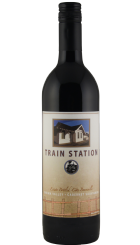
2018 Train Station Cabernet Franc
100% Cabernet Franc
14.1% ABV | SRP $30 | SAMPLE

Sourced from a mere 26 rows of Cabernet Franc with own-rooted vines (not grafted onto different rootstock), this estate-bottled Cab Franc is a special one because there's only so much grape to go around from such few rows. As it turned out, in 2018 there was enough to set aside a small chunk to make a single varietal wine.

Colour: 
Medium ruby

Nose: 
Ripe red fruit - especially raspberry and strawberry, white flowers, vanilla, black pepper at the finish

Palate: 
This is a wine full of gaeity - it will immediately put you in a good mood. With a layered aromatic complexity and a rounded mouthfeel, it has the same notes on the palate as on the nose, and a whiff of dried violets. Medium body, balanced acidity, balanced tannins, medium finish. Despite the 14.1% ABV, it definitely doesn't feel like it. A fruity and very food-friendly wine that's certainly ready now but could also be cellared for up to 3 years.

CO DINN CELLARS
You don't have to know Co of Co Dinn Cellars long to know how passionate he is about wine making. I was already agreeing with him on everything I'd read in his introduction on his website, and then I had a phone conversation with him. His matter-of-fact intensity shows in everything he says, and the love for the craft of wine-making is more than evident in everything he says. Co will readily tell you that he is not a farmer and does not grow his grapes, but he will also tell you in depth that he is very particular about the grapes he sources and it clearly shows in his wine. Even though I have only tasted exactly one of his wines, I don't doubt for a second that all his wines are elegant and worth seeking out.

Although Co Dinn wines aren't on shelves in the Bay Area, they can be shipped directly to consumers and I highly recommend you take advantage of that.

2016 GSM Lonesome Spring Ranch Vineyard
41% Grenache, 30% Syrah, 29% Mourvèdre
14.7% ABV | SRP $45 | SAMPLE

The Lonesome Spring Ranch (LSR) vineyard is one of the "jewels" Co mentions in his intro. In its previous life the LSR vineyard was pasture and an apricot orchard. Established in 1996, this 109+ acre property is now a vineyard farmed using Vinewise management practices. But really, the talent is not just in the vineyard or growing the grapes, but in what the winemaker does with the grapes to make superior wine. And that is just what this wine is... superior in all aspects.

Colour: 
Deep ruby

Nose: 
Black fruit, a hint of cooked red fruit, dried savoury herbs, tobacco, black pepper, leather, faint baking spice

Palate:
The same notes on the palate as on the nose but also black cherry and lingering tobacco and coffee on the finish. Medium body, balanced acidity, soft tannins, long finish. This is a beautifully structured wine that really shines when paired with meaty food.

THE WINE + FOOD
As soon as I tasted each wine I knew what I wanted to pair with it. Here in N. CA we're going into spring but with some typical last minute weather vacillations, so I took advantage of the rain and cold and decided to pair the wines with pasta and meat courses at dinner. Farfalle with rapini, olio nuovo, and pecorino with the Cab Franc, and a compound salt-crusted ribeye with braised fennel and potatoes with the GSM.

Pasta, 1st course: The garlic and slight bitter notes of the rapini toned down by the al dente pasta, olio nuovo drizzle, and the salty edge of the pecorino were incredible with the juicy, ripe, fresh, acidity of the Cab Franc. The next day the wine had gone from a juicy wine to a more sombre one that would definitely be excellent with a dish that incorporates tomato sauce... something like meatballs with ricotta and a tomato sauce, bread on the side. Either way, this is a delicious wine and we couldn't have asked for a better pairing! 

Steak, 2nd course: The herbed compound salt-crusted steak along with the fennel and potatoes stood up nicely to the wine. At first, the wine was a bit closed and rather serious wine even after a 60 min. decant. Nevertheless, the complexity of the wine highlighted the slight sweetness and anise of the fennel and of course, was wonderful with the steak. And the potatoes, well, can't ever go wrong with get steak and potatoes! All in all, we really enjoyed the wine together with the food and if I had to summarise this wine in one sentence it would be: This wine needs food, and make it red meat!

As Jean-Baptiste Poquelin, better known as Molière, said, "Trees that are slow to grow bear the best fruit." And so, the first day the wine was quite tightly wound although still terrific with our steak, but when we revisited this the next day, it had opened up to a most delightful wine full of primary fruit aromas leading into greater depth. The structure and mouthfeel did not change drastically but every aroma was deeper, more pronounced, more present, lingered longer. We had it with charcuterie (no bread, cheese, etc.) and it was splendid! I love what Co at Co Dinn Cellars is doing and his passion for his craft is obvious in his wine!

So that was me, but the possibilities are endless so check out these blog posts and be inspired by what the rest of us sipped, savoured, and paired with our Yakima Valley wines:
  • Robin at Crushed Grape Chronicles leads the way with “Yakima Valley AVA – Blends of friendship and history with wines from Eight Bells and Pearl and Stone Co.”
  • Payal at Keep The Peas shares “Yakima Valley Wines FTW!”
  • Camilla of Culinary Adventures with Cam shares “Yakima Valley’s Sin Banderas Rhone Roses Compliment Dishes with Asian Flair” and “Mediterranean-Inspired Dishes Paired with Yakima Valley Wines from Dineen Vineyards”
  • Linda at My Full Wine Glass invites us to “Meet Kerry Shiels: A Yakima Valley winemaker with Vision”
  • Terri of Our Good Life shares 2 posts “Fortuity…Taking Advantage of Life’s Great Wines!”, and “Two Mountain Rose and Fennel Wild Mushroom Tarts”
  • Wendy of A Day in the Life on the Farm is cooking up “Smoked Beef Brisket with Canvasback Cabernet”
  • Rupal the Syrah Queen gives us “Yakima Valley – Red Willow Vineyards Producing Some of Washington’s Finest Syrahs”
  • Jane of Always Ravenous makes our mouths water with “Filet Mignon paired with Washington Yakima Valley Cabernet Sauvignon”
  • Martin with ENOFYLZ WineBlog is giving us “a Taste of Washington State’s Yakima Valley”
  • David at Cooking Chat has 2 posts for us also “Lamb Ragu Pasta with Red Wine from Dineen Vineyards” and “Sin Banderas Rosé with Corned Beef & More Yakima Valley Wine Pairings”
  • Nicole of Somm’s Table shares “Big, Beautiful Reds from Yakima Valley and Tasty, Meaty Fare”
  • Jennifer at Vino Travels tells us about “Italian Grapes of the Yakima Valley with Sleeping Dog Wines”
  • Gwendolyn the Wine Predator explores “Washington Syrah: Hedges, L’Ecole, VanArnam with Lamb Stew”
  • Susannah at Avvinare gives us “Malbec from VanArnam Vineyard in Yakima Valley”
  • Lori at Exploring the Wine Glass shares “Tasting the Soul of Wine in the Heart of Yakima Valley”

Saturday, February 27, 2021

BARTENDER'S CHOICE FROM PRIORAT


This month - February 2021 - the World Wine Travel group is exploring the wines of Catalonia, Spain. Between reds, whites, and Cavas coming from this corner of Spain, there's a vast variety of wines to choose from for any occasion and we had a field day deciding on a wine for this review before ultimately settling on a unique wine from an equally unique part of Catalonia. See the overview in host Susannah's preview post and join us on Twitter under #WorldWineTravel on 27 February 2021 at 8 AM PST to talk about all things Catalan wine.

CATALONIA (CATALUNYA) + PRIORAT
Image: Catalonia, Spain. indigowine.com
Catalonia is in the northeast corner of Spain bordering France to the north and the Mediterranean sea to the east. There are four Catalonian provinces, of which Barcelona might be the most readily known globally.

Priorat is in Tarragona province in  southwest Catalonia, however, and is a Denominació d'Origen Qualificada (DOQ) for Catalan wines produced in Priorat county. The DOQ covers 11 municipalities that primarily produce intense, full-bodied red wines, and was relatively obscure to the wine world until the 1990s.

Priorat DOQ includes the valleys of the rivers Siurana and Montsant, and vineyards are planted on terraced slopes at altitudes between 100m and 700m above sea level. Priorat summers are long, hot and dry while winters are cold with occasional frost, hailstones, and drought. The area is characterised by its unique terroir of volcanic soil comprising black slate and quartz, known as llicorella.

The traditional grape variety grown in Priorat is Grenache, found in all the older vineyards. Amongst other red varietals allowed are: Garnacha Peluda, Carignan (or Samsó), Cabernet Franc, Cabernet Sauvignon, Merlot, Pinot Noir, and Syrah. White varieties allowed are: Garnacha blanca, Macabeo, Pedro Ximénez, Chenin Blanc, Moscatel de Alejandría, Moscatel de Grano Menudo, Pansal, Picapoll Blanco, and Viognier.

Along with Rioja DOCa, Priorat is one of only two wine regions in Spain to qualify as DOCa (Denominación de Origen Calificada), the highest qualification level for a wine region within Spanish wine regulations. Priorat wines are absolutely worth the effort and price but can also offer terrific QPR!

CLOS I TERRASSES
As James Russell Lowell said, "Fate loves the fearless". In 1988 a young Daphne Glorian, along with René Barbier, Álvaro Palacios, Carles Pastrana, and Josep Lluís Pérez pooled resources to purchase 17 terraces of vines situated ~400m above sea level in a wooded hollow just outside the village of Gratallops in Priorat, Spain, a rugged and wild region rich in history, poor in soil, and largely unknown outside Catalonia.

Fast forward to today, when Daphne's wines have evolved to become some of the most sought-after references for the Priorat region and some of the most desired wines in the world. Since 2004 all of the Clos I Terrasses vineyards are certified organic  with biodynamic practices.

2015 Clos I Terrasses "Laurel"
80% Grenache, 15% Syrah, 5% Cabernet Sauvignon
15% ABV | SRP $45

Sourced from 3 small vineyards in Gratallops and aged in amphorae and oak, Laurel is a blend of Grenache, Syrah, and Cabernet Sauvignon. It is Clos I Terrasses’ second wine (the first and most well known being Clos Erasmus), made from the grapes from younger vines, or the occasional declassified barrel of Clos Erasmus. Nevertheless, it is a dense, concentrated Priorat wine with tremendous aging potential and perhaps it is inaccurate to call it a second wine because it really is in its own league.

Colour: 
Medium ruby

Nose: 
Black and red fruit, cassis, liquorice/fennel, tobacco, graphite, ink/iodine, leather, cloves, bay leaf, pepper. Somewhat medicinal.

Palate: 
This is a delicious - although untraditional - Priorat wine with a layered aromatic complexity and an unctuous mouthfeel. The same notes on the palate as on the nose, a bit more obviously medicinal and graphite laden. Full body, balanced acidity, grippy tannins that soften after ~30 min, med-long finish. An elegant, structured rich wine that begs for robust food.

THE WINE + FOOD
We thoroughly enjoyed this wine with a late night movie and bits and bites - an assortment of charcuterie including f
inocchiona, a Tuscan fennel-studded variety, Idiazabal, Manchego, and Gabietou cheeses, papas arrugadas, and a refreshing herby mojo verde. The charcuterie and the cheeses certainly were perfect with the wine but the salt-crusted papas arrugadas and mojo were outstanding! The fruit and inky fennel notes  in the wine worked marvellously with the finicchiona and the bright mojo. We have another bottle that we'll hold for a few more years to see how it develops. Another splendid wine from Clos Erasmus, and a must for Priorat red lovers!

Also check out these blog posts and be inspired by what the rest of us sipped and savoured:
  • Allison and Chris from Advinetures look at “Cava: Spain’s Answer to Champagne”
  • Andrea from The Quirky Cork enjoys “Tapas with Segura Viudas Brut Reserva Cava”
  • Camilla from Culinary Adventures with Camilla shares “Pollo a la Catalana + Alvaro Palacios Camins del Priorat 2019”
  • David from Cooking Chat shines with “Mushroom Fricassee and Red Wine from Priorat”
  • Gwendolyn from Wine Predator brings “Sparkling Wine Secrets: Catalonia Cava from Marqués de Cáceres with Spanish Chorizo Kale Bean Stew”
  • Jeff from Food Wine Click looks at “Exploring the Variety of Still Wines from Catalunya”
  • Linda from My Full Wine Glass showcases “Pere Mata Cupada Rosé Cava: Finesse in a glass”
  • Lynn from Savor the Harvest posts “Beyond Cava: Loxarel and Gramona Organic Sparkling Wines”
  • Martin from Enofylz Wine Blog shares “A Taste of Can Descregut; Grower Spanish Sparkling Wine From The Corazón del Penedès”
  • Melanie from Wining With Mel muses about “Innovative winemaking in Catalunya’s Penedès: Torres Gran Coronas Reserva”
  • Nicole from SommsTable pens “On a Hilltop in Priorat”
  • Payal from Keep The Peas joins with “Bartender’s Choice from Priorat”
  • Pinny from Chinese Food And Wine Pairing writes about “Enjoying Cavas of Different Price Points”
  • Robin from Crushed Grape Chronicles focuses on “Priorat DOQ in Spain’s Cataluña region and Franck Massard’s 2015 “Humilitat”
  • Steve from Children of the Grape describes “Cava by the Sea”
  • Susannah from Avvinare.com thinks about “Two Key Areas in Catalonia Wine Scene: Cava and Priorat”
  • Terri from Our Good Life dishes about “Chicken Empanadas and Azimut Cava”
  • Wendy from A Day In The Life On The Farm adds “Enjoying Tapas with Spanish Wines from Catalonia”


Sunday, February 14, 2021

RED WINES OF PROVENCE WITH THE #WINOPHILES

Source: Wine Folly/Flickr

It's already February 2021, we're in the throes of the COVID-19 pandemic, and trying our hardest to create the new normal while waiting with bated breath to return to the regular normal. Luckily, some things have remained the regular normal. Things such as our blogging community of French wine enthusiasts and professionals who meet every month for a virtual bonanza of wine. This month the #winophiles, as we are known, are exploring the red wines of Provence. When we hear wine and Provence in the same sentence we almost always think rosé wines of all shades made from grapes growing in impossibly sunny and clement weather. But Provence has more to offer than delicately coloured rosé wines and visions of lavender fields near the Mediterranean sea. Provence in fact, makes red, white, and rosé wines from a variety of grapes... something for everyone and for all foods.

Red wine grapes include varieties found throughout much of France such as Grenache, Syrah, Mourvedre, Tannat, Counoise, Cinsault, and of course, Cabernet Sauvignon, but also grapes not often seen elsewhere like Folle Noir (a favourite!), Calitour, Tibouren, Barbaroux, and Braquet. All in all about 36 grape varieties are allowed in Provence spanning a few different countries including Spain and Italy, although in Provence they are generally known by their French/Provençal names.

Provence has 9 viticultural regions or AOCs (Appellation de’Origin Contrôlée). Among those, the ones known for red wine are Bandol (arguably the most famous Provençal red wine AOC), Baux de Provence, Palette, Bellett, and the newest AOC (since 1998), Pierrevert. Provence red wines, although not as known as their sublime coloured siblings, the rosés, are in fact as serious a series of wines as any other.

Provençal reds are complex, exceptionally food friendly, and cellar-worthy for years. One of my favourite pairings is lamb cooked with an elaborate mix of spices... it works hand-in-glove with the best of garrigue-laden Provence reds. Have I convinced you yet to visit, revisit, and dive into Provençal red wine offerings? Grab a bottle or two of your choice and explore with us on Twitter on 20 February 2021 at 8 AM PST under the hashtag #winophiles to talk about all things Provence red wines. To inspire you, here's a snippet of what you can expect from some of us:
  • Lynn over at https://savortheharvest.com/ has for us "Winning Red Wines from Provence with Lamb Meatballs: Domaine Hauvette and Clos Cibonne"
  • Susannah from https://avvinare.com/ is telling us how "Beef stew and A Glass of Bandol Rouge Warms the Heart"

Saturday, October 10, 2020

KICKING OFF AUTUMN WITH #MERLOTME


This year again the #winepw group are having a celebration of Merlot Month. Several of us received wine samples and although I'm sure there is overlap in the bottles we all received, it should be a fun discussion of all things Merlot! Check out the wines, tastings, pairings, musings below, and join us on Twitter on Saturday, 10 October at 8 AM PST under #winepw to chat to everyone about their thoughts on Merlot, the wines, and their Merlot+food pairings.

MERLOT + MERLOT MONTH
Merlot is a dark blue grape traditionally used for blending where it is used to add body and softness to a blend, but it is also used in single-varietal wines. Merlot wines are generally fleshy, soft, velvety, low in tannins and with juicy acidity. Aromas associated with Merlot are a combination of black and blue fruit, cherry, plum, eucalyptus, thyme, leather, wet soil, mushrooms, etc. If the Merlot is aged in oak, add chocolate, vanilla, coffee, baking spices to the mix. There are also some Merlots that are quite brawny and grippy but usually Merlot wines are very drinkable, easy to pair with a variety of foods, and quite delicious!

October has been declared as National or, depending on whom you ask, International Merlot Month. The #MerlotMe hashtag was created in 2013 to promote Merlot and perhaps counter some of the negative effect of the movie Sideways. Evidently, Sideways has the dubious distinction of turning wine drinkers in an entire country - the US - off Merlot. I've watched the movie and I can say that "I'm never drinking Merlot" was NOT my takeaway from the movie. In fact, I had no take-aways from it. I'm sure I've missed something but I haven't figured out how an average buddy film could single-handedly have such a profound effect on a wine grape that is used in acclaimed wines such as Petrus. But it has, since 2004 when the movie was released. I hope this is an MBA case study somewhere! Despite the ups and downs, winemakers have continued to produce excellent Merlot wines and for that, many of us wine lovers are grateful.

THE WINES
I've received four wine samples for Merlot Month and have reviewed only two here. The wines all arrived 3 days ago and I was quarantined so wasn't allowed in the kitchen until today. Nevertheless, I'm glad to be back and thankful that I did not catch Covid-19 or anything else during my flights and time spent working with others. 

2017 Duckhorn Vineyards Napa Valley Merlot
80% Merlot, 16% Cabernet Sauvignon, 2.5% Cabernet Franc, 1% Petit Verdot, 0.5% Malbec 
14.5% ABV | Sample (SRP $56)

Vinification: 
100 French oak, 40/60 new/neutral

Colour: 
Deep ruby

Nose: 
Ripe, ripe, ripe black and blue fruit, almost jammy. A whiff of baking spices and vanilla.

Palate: 
Similar to nose: ripe black and blue fruit, a splash of red fruit, baking spices, vanilla. A refreshing juicy acidity, fine-grained tannins, a medium+ body, with a lengthy finish. The wine opened up as it sat in the glass but overall it could use a rest in the bottle. I think it would be great in 3-5 years.

2018 Decoy Sonoma County Merlot
98% Merlot, 1% Cabernet Sauvignon, 1% Petit Verdot
13.9% ABV | Sample (SRP $25)

Vinification: 
100 French oak, 40/60 new/neutral

Colour: 
Medium Ruby

Nose: 
Black cherry, violets, black and white pepper

Palate: 
Black cherry, cocoa, cedar, and a note of minerality at the taper. Juicy acidity, dusty tannins, medium body, medium finish. This wine may be terrific in 2-3 years but I'm not sure how much more complexity it would develop. It might be best to enjoy it now.

THE FOOD
We paired both wines with a gratin of ziti and cauliflower done in an equal mix of two classic French sauces: sauce tomate and soubise. The sauce tomate brought the acidity to match the Merlot, and the soubise brought the smooth heft from the béchamel sauce and onion purée. The parmesan-bread crumb crust added the savoury umami that really brought everything together.  And the pasta and cauliflower added a much-needed coziness. In general both wines went nicely with the gratin but the Duckhorn was the clear winner if there were one. This was a perfect stay-in for the evening and watch your favourite movie or TV show wine and food pairing. A welcome change from the hectic few weeks I've had of wilderness holiday, work travel and  project follow-up, exam prep and exam, and finally ~10 days of quarantine since I'd been out of town for work. I barely remember September!

Friday, May 15, 2020

WELCOMING SUMMER WITH A BERRY DELICIOUS BROUILLY


This May the French Winophiles are exploring Cru du Beaujolais. All 10 crus, so lots of options and lots to look forward to. The Beaujolias crus are stacked between Burgundy (north) and Rhône (south) and offer an exhilarating variety of wines to try, warranting a tasting dedicated solely to Beaujolais!

               Image from https://www.discoverbeaujolais.com/

Cindy from Grape Experiences is our host this month, read her preview post here to find out more about the finer points of Cru Beaujolais.

CRU BEAUJOLAIS: BROUILLY
I had originally thought of doing a north-to-south tasting of all 5 Cru Beaujolais wines we've got in the cellar, which would've been a great way to really highlight the nuances of each cru. But I've put a weekly limit to the number of alcoholic drinks we're allowed, and the virtual socialising has been adding up so there's no way we could've done the full tasting *and* the social hours and stayed within our limit. The upside to all the socialising I suppose, is that no one is taking their relationships for granted and everyone is going out of their way to keep in touch, including us, even if it is just a check-in to say hello. Everything is virtual nowadays, even meditation sessions! Although, I chicken out of those every week - I have done yoga and meditation since a young age, but I just cannot truly meditate in front of a screen.

So I settled on a Brouilly for our May 2020 #winophiles tasting. Brouilly is the southernmost of Beaujolais crus, and at 1,315 hectares, is also the largest, with ~20% of the total Cru Beaujolais area. The wines are fresh, fruity, can be enjoyed young or aged up to 10 years, and are easy to pair with  various savoury foods. And, as is the case with all of Beaujolais, a great value for $$$. The only red grape allowed in Brouilly is Gamay, with Chardonnay, Melon de Bourgogne, and Aligoté allowed up to 15% in a blend. The four different types of soils on and around Mount Brouilly allow nuanced wines that can fit every palate. There is a long history of superior wine making and as far back as 1769, Brouilly was producing elegant wines that were authorised to be sold to Paris. Certainly a feather in the cap at that time.

I was introduced to Beaujolais and its wine-making communes when I took a wine class during my undergraduate years at Purdue Univ. In the early 2000s IN did not have much going on by way of wine but the class was incredible. The professor had been a wine consultant with American Airlines for decades prior so we always had the best wines in class and reps from all over who came to lecture, including Dom Perignon and other premium champagne houses. And every class included food pairings with the wines - looking back, I'm amazed and impressed at the effort and enthusiasm Prof. Vine put into the class.

THE WINE
2017 Les Frères Perroud "Amethyste", 13% ABV
SRP $16

The Perroud brothers grow the grapes for the Amethyste wine on the southern slope of the Saburins hill in Quincié village, one of the six villages of the Brouilly AOC. The wine is named as such because of the crystalline amethyst layer deep in the soil.

The wine is 100% Gamay and is aged for one year in Burgundian neutral oak barrels. According to the winery website, this wine is best between 2018 and 2032, so we definitely had it on the young side of that time period. Nevertheless, it is a beautiful ruby coloured wine, with aromas full of berries black and blue, ripe purple plums, cooked ripe raspberries, and a hint of black pepper in the very back. Same on the palate, with plush tannins and juicy acidity. The finish is medium and overall the wine is balanced although a bit simple. A splendid wine that I'd love to try again in a few years to see if anything has changed.

We enjoyed it with a classic Beaujolais pairing of charcuterie, cheeses, a goat cheese and leek crumble, and sardine butter. All the food was an expectedly incredible complement to the wine. Even the sardine butter which is silky and more buttery than briny or fishy. We actually had Coravined two glasses to start, but the food and wine were so delicious together that we ended up opening the bottle.

See the links below to find out what my fellow #winophiles are saying about the Cru Beaujolais wines they chose and the superb food pairing ideas for each wine! Join our Twitter chat on Saturday May 16 from 8 - 9 AM PST at #Winophiles. Hope to see you there!
  • Wendy from A Day in the Life on the Farm had “A Casual COVID19 Visit with Charcuterie and Chateau de Poncie Le Pre Roi Fleurie”
  • Camilla from Culinary Adventures with Cam pairs “Tuna Pâté + Joseph Drouhin Hospices De Belleville Brouilly 2016”
  • Jill at l’Occasion explores “Soil + Wind: Tasting Cru Beaujolais with Château du Moulin-à-Vent”
  • Payal of Keep the Peas is “Welcoming Summer with a Berry Delicious Brouilly”
  • Lynn at Savor the Harvest finds “Fleurie – The Princess Queen of Beaujolais Crus #Winophiles”
  • Jane at Always Ravenous explores “Cru Beaujolais: Tasting and Food Pairings”
  • Jeff at Food Wine Click enjoys “Cru Beaujolais at the Grill”
  • Robin at Crushed Grape Chronicles shares “Flowers for Julien – Beaujolais in May”
  • Linda at My Full Wine Glass discovers “Gamay and Granite – A Beaujolais Love Story #Winophiles”
  • Susannah Gold at Avvinare finds “Cru Beaujolais – An Endless Discovery”
  • Pinny at Chinese Food and Wine Pairing discovers “Cru Beaujolais – Cedric Lathuiliere Fleurie Paired with Frog Legs #Winophiles”
  • Nicole at Somms Table explains “Julien Sunier Régnié and a Focaccia Fail”
  • Lauren at The Swirling Dervish meets “Morgon de Jean-Pau Thévenet, One of the Beaujolais Gang of Four”
  • Kat at The Corkscrew Concierge is “Exploring the Differences & Pairing Versatility of Cru Beaujolais”
  • Martin at Enofylz Wine Blog considers “A Taste of Chénas, Beaujolais’ Rarest Cru”
  • Gwendolyn at Wine Predator shares “Comparing Louis Tete’s 2016 Brouilly and Morgan Gamay from Beaujolais With Pairings”
  • Terri at Our Good Life shares “Cru Beaujolais with Rustic Foods”
  • Cindy at Grape Experiences, is loving “The Wines of Fleurie – An Enchanting Introduction to Cru Beaujolais”

Friday, October 18, 2019

CAHORS: WHAT PUT MALBEC ON THE MAP


This month the French #winophiles are in Cahors AOC, southwestern France. Nicole of Somm's Table is graciously hosting, and we can thank Jill of L'occasion for scoring us Cahors wine samples through the UIVC (Union Interprofessionnelle des Vins de Cahors) for a few of us. But even without samples, everyone is welcome to join us as we jaunt through Cahors and enjoy the wine!

Malbec - aka Côt, Côt Noir, Auxxerois, Pressac, and hundreds of other regional names - is native to France, especially the southwest in the Lot department where it was introduced by the Romans around 50 BC and has been cultivated since then despite a few setbacks  like phylloxera and frost along the way. Incidentally, while the Romans were introducing grapes in southwestern France, they were also capturing Gaulish villages in the area and Romanising them. One village in particular managed to defend itself and remained Gaulish despite being surrounded by Romans and other captured villages. Asterix, the hugely popular French comic series about the resistance of a Gaulish village against Roman occupation, is set in that very village! The village chief Vitalstatistix in those comics is based on Lucterius, a formidable leader of the Gauls who was instrumental in defending the village from the Romans. If you haven't read any Asterix, begin with Asterix the Gaul!

As a grape Malbec is a bit finicky, like Pinot Noir. It is thick-skinned but sensitive to humidity, frost, temperature, and other weather conditions which make it prone to  diseases like downy mildew and "coulure", or lack of full development of grapes. Malbec grapes make deep, inky, intense wine, making it popular as a blending grape for colour and fruit, especially in the Loire, Bordeaux, and elsewhere where Bordeaux-style blends are made. These qualities have also earned it the nickname "black wine" although of course it is not actually black. At one point Malbec was grown in up to 30 departments around France but these days it primarily grows in the small town of Cahors which is the capital of the Lot department and a small town on the river Lot that flows towards Bordeaux. Cahors is a red wine-only AOC, with a minimum of 70% Malbec required in each blend. Grapes commonly used to blend with Malbec are Merlot and Tannat.

In the mid-19th century at the instruction of provincial governor Domingo Faustino Sarmiento, Malbec was planted in Argentina by French agronomist Miguel Pouget. A lot has happened between then and now in the Argentine wine world but it ultimately led to Malbec being the most widely planted red grape in Argentina, which is nearly synonymous with Malbec around the world. And, as I'd mentioned above, Malbec is a fussy grape and hectares of it succumbed to frost and phylloxera around the time it was fledgling in Argentina. Thanks to that serendipitous planting, despite the natural devastation in France, Malbec survived, thrived, and became a fixture on the world wine map, albeit through Argentina via Cahors!

All that aside, Argentine and French Malbec are vastly different wines. The grapes themselves are same but different... tighter clusters and smaller berries in Argentina, e.g. And taste... Argentine Malbec is jammy, fruit forward, with some floral notes, soft tannins and a velvety texture, whereas French Malbec is leathery, with flavors of tart currant, black plum, firm tannins, higher acid, and a savoury meatiness on the palate. The higher tannins and acid in French Malbec yields lower alcohol, age-worthy wines compared to Argentine Malbec.

THE WINE
The Cahors Malbec wines I received were:

  • Château du Cèdre Extra Libre 2018
  • Château de Gaudou Le Sang de Ma Terre 2018
  • Château Lamartine Cahors "Cuvée Particulière" 2016

The one I opened for this review was the Château du Cèdre Extra Libre (2018) because it has no added sulphites and we couldn't wait to try it! I will review the other wines at a later date.

Château du Cèdre Extra Libre, 2018 | SRP n/a
95% Malbec, 5% Merlot
https://www.chateauducedre.com/
Ch. du Cèdre was started by Charles Léon Verhaeghe, a Flemish immigrant who settled in the Lot department. Truly a family owned and run winery, they are now on their third generation of family members running the show.

The grapes for this wine come from vines on the lower terraces with sandy alluvial soil, and from the upper terrace with limestone soil. The grapes are sorted and destemmed in the vineyard, at the winery they're macerated for 30 days and fermented in concrete tanks before being aged in nearly neutral (twice used) oak barrels.

The wine is beautiful in the glass with a gorgeous magenta rim and deep core. On the nose: aromas of ripe red berries, fresh red roses, and cinnamon. On the palate: juicy, same as nose + black pepper, a hint of nutmeg, and a faint minerality, all with mouthwatering acidity and a medium finish. This is a highly quaffable wine with or without food, and quite different from any Cahors Malbec we've had. It is, however, a must to serve it cool, not at room temperature, to get the best of it.

THE FOOD

I paired the wine with wild scallop theeyal, a dish from Kerala, India, a coastal state known for its abundant seafood, extensive use of coconut, curry leaves, and fragrant rice varieties. Although scallops are found in every ocean of the planet, they are not commonly found on Indian menus even though India, as a peninsular country, has an extensive coastline. Maybe they are not abundant off the Indian coast, or, like oysters, might be considered "fisherman's food" in India. Like most food from the Indian subcontinent, theeyals are very flavourful but not fiery, and have a distinct deep red colour because of the deeply roasted coconut used in the sauce (clearly, I did not roast the coconut enough, because my sauce was hardly deep red!). In addition to all the spices, the sauce has a pleasant tangy acidity in the background that can come from either tamarind or kudampuli (Garcinia Cambogia), a pumpkin-shaped sour fruit whose dried and reconstituted peels are used extensively in Sri Lankan and Keralan cuisine.

Kudampuli, what I used rather than tamarind, lends a discernible but complementary acidity to the sauce, and actually brings forward the fruitiness of the wine. All the flavours - the roasted coconut, sweetness of the fresh scallops, and the bright and fruity wine - were so delicious that we'll be having more of this!

We'll be talking Cahors on Twitter this Saturday, 19 October at 8 AM PST so join us and be sure to use #Winophiles in your tweets so that we can see your comments. If you can't make it, no worries, you can stop by whenever to see what the other friendly Winophiles have done with Cahors this month while we slowly but sure move into colder weather here in the northern hemisphere:

  • Jane from Always Ravenous explores the “Flavors of Fall Paired with Cahors Malbec”
  • Cathie of Side Hustle Wino looks at “Cahors – TheBirthplace of Malbec”
  • Jill from L’Occasion shares “Cahors, a French Classic”
  • Camilla of Culinary Adventures with Camilla will be posting “Château du Cèdre Extra Libre 2018 Malbec + Cider-Braised Chicken Thighs” 
  • Wendy Klik of A Day in the Life on the Farm samples “A Trio of Cahors Wine and the Pairings Served” 
  • Jeff of FoodWineClick! gives us “The Malbec You Never Knew: Cahors”
  • Linda of My Full Wine Glass shares “Newbies to Old-World Malbec Discover Cahors”
  • Cindy of Grape Experiences explores “The Old-World Style of Malbec from Cahors”
  • Deanna of Asian Test Kitchen gives us “French Malbecs Meet Chinese Duck”
  • Gwen from Wine Predator shares “From Cahors: Biodynamic Chateau du Cedre Malbec with French Charcuterie”
  • Pinny of Chinese Food & Wine Pairings matches “Cahor Malbecs and Waygu Beef”
  • Cynthia and Pierre of Traveling Wine Profs give us “Cahors, Hainan Chicken Rice, and the Stories Wine Books Tell”
  • Susannah of Avvinare will be “Shedding Light on Old World Malbec from Cahors”
  • Payal of Keep the Peas discusses “Cahors: What Put Malbec on the Map”
  • Rupal of Syrah Queen will posting “Cahors – Tasting “Black Wines” With The Original Malbec”
  • David of Cooking Chat pairs “Mushroom Truffle Risotto with Cahors Malbec”
  • Nicole of Somm’s Table shares “Bringing Home Cahors with Clos D’Audhuy”