Showing posts with label yeast. Show all posts

Friday, October 18, 2013

KHOUBZ aka PITA: IN AN INSTANT

Khoubz in Arabic, pita in the West via Greece. Whatever you call it, it's easy to make at home! And don't give up even if the first couple of times your loaves aren't the best or the roundest because... well because you can't make an omelette without breaking some eggs. So get to it!

I wanted to try making bread with instant yeast which I never use because it just sounds soul-less. And I am glad I tried it, because now I know why I never use instant yeast. Can't make an omelette without you-know-what!

Of course, it's better to use instant yeast and have bread rather than having none at all, but I missed the flavour of the yeast and delicious yeast-y smell of bread in the oven. If you have time, use the yeast dough method in my pizza dough post. Or make both a couple of times and see if you prefer one over the other.



Khoubz, or Pita
Makes: 8 - 10 loaves

- 3 cups flour
- 1-1/2 tsp salt
- 1 tsp sugar, I use demerara
- 2-1/4 tsp instant yeast (1 packet)
- 1-1/2 cups warm water
- 1/2 cup milk

- 2 tbs olive oil
  1. In a large bowl, mix the yeast, flour, salt, and sugar. Add the olive oil and 1 cup water and mix to form a ball of dough. If the dough is not holding together and is crumbly, add more water 1 - 2 tbsp. at a time. Mix the water really well into the dough each time - don't let the water just remain on the surface of the dough otherwise all you'll get is a sticky mess!
  2. Once you have a ball of dough, put it on the counter-top, baking tray, or cutting board and knead for approximately 5 minutes or until the dough feels smooth and supple. A simple hand kneading technique is to firmly press down on the dough with the palm of your hand, fold the dough in half toward you like you are closing an envelope, rotate the dough 90 degrees and then repeat these steps. But really, knead however you want and do whatever it takes to make that dough smooth like a baby's bum.
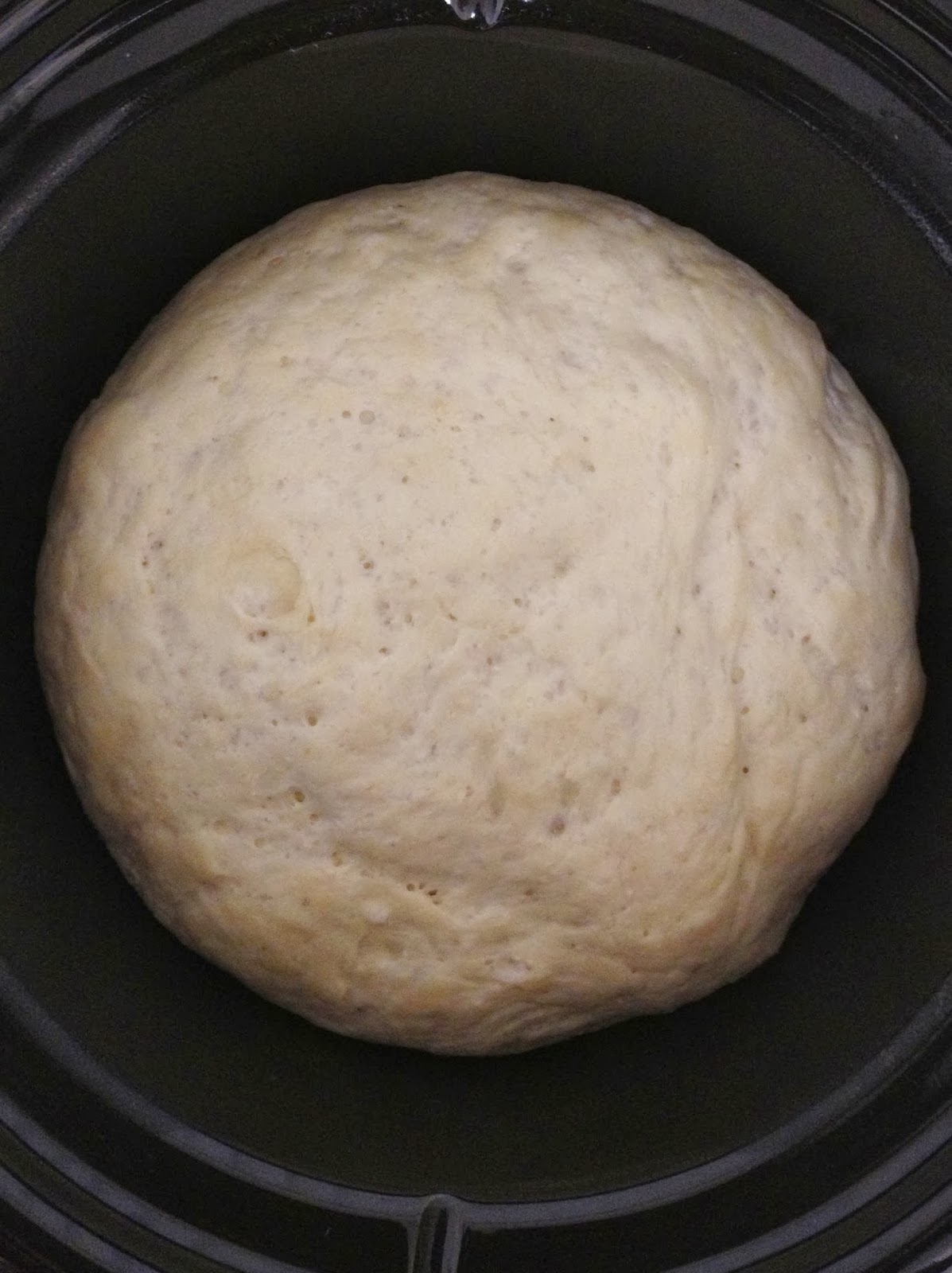
  3. Oil your palms with a tsp of olive oil and shape the dough into a ball. Let it rest in a covered bowl in a draft-free, warm place such as an unheated oven. After 60 - 90 minutes when the dough has risen and doubled in size, push it down gently to release some of the yeasty gases and divide the dough into 8 - 10 pieces.
  4. Preheat the oven to 425 F/220 C with or without a pizza stone.
  5. Roll each piece of dough into a ball, cover the balls with a damp kitchen towel, and let them rest for 15 - 20 minutes. Or, roll each ball of dough into a circle, and let it rest in baking trays or any other flat surface for 15 - 20 minutes.
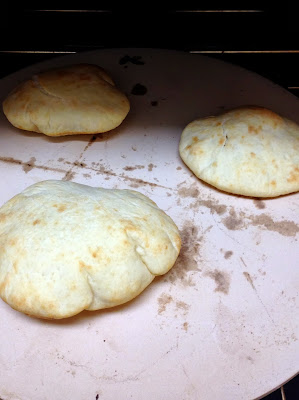
  6. Put 2-3 or however many uncooked pita loaves fit without being crowded on your baking surface and bake for 5-6 minutes. When the bread puffs up and takes on a slight brown colour, remove from the oven. The bread *will* brown and eventually burn if you leave it in the oven for even a minute longer than 5-6 minutes. 425 F/220 C is hot!
  7. If you're not eating these immediately, take them out of the oven, put them in a large container and cover with a damp towel until you're ready to use them. Reheat as needed.

Thursday, January 31, 2013

PIZZA - BEST DOUGH AND SAUCE EVER!

The sauce sounds strangely plain, but it's not. Try it and you'll know what I mean! I like all of the crust to have sauce so I spread it to the edge.


Pizza Dough
makes: 5 loaves, of 7 oz. each (enough for approximately 4-5 thin crust pizzas)

- 4-1/2 cups unbleached Tipo 00, bread, or unbleached all-purpose flour
- 1-2 tsp. active dry yeast
- 1/4 cup olive oil (optional, but I recommend it - it makes the dough supple and lovely)
- 1-2 tsp. salt
- 1-3/4 cups cold water (ice cold, not room temperature)
- Semolina or cornmeal for dusting the pan (I use cornmeal since I always have some)

1. If your yeast is old, it may not be alive - proof the yeast as described in the Notes below to check if it is alive.
2. Stir together the flour, salt, and yeast in a large bowl. If you are proofing the yeast, mix the flour and salt well, then lightly mix in the yeast mixture, then follow the instructions below.
3. Mix oil and water into the flour with a metal spoon or by hand.
4. Knead the dough for 5-8 minutes or until it is smooth, springy, and elastic. Don't over-knead or you'll get a chewy pizza crust later!
5. The dough should clear the sides of the bowl. If it's sticky, add flour by the tablespoon; if it's dry, add water by the tablespoon, until the flour comes together.
6. Let the dough rest for 10 minutes, knead gently for barely 30 seconds, and put in a large bowl.
7. Cover the bowl and put in a warm place (not hot) for 1 hr. or until the dough has doubled in size.
8. Deflate the dough and shape into a ball.
9. Coat the dough ball lightly with olive oil and refrigerate overnight or for up to 3 days, in a large airtight container.
10. Remove the dough from the fridge at least 1 hr. before using (room temperature dough is easier to work with, and prevents over-working the dough).
11. Preheat oven to 450 F/230 C.
12. Sprinkle semolina or cornmeal on baking trays.
13. Divide the dough according to the number of pizzas you want to make.
14. Stretch the dough with floured hands and place in the baking trays. (Rolling pizza dough will overwork the gluten in the dough and make the crust too chewy/a bit leathery.)
15. Lightly shape the stretched dough in the trays to fit as needed.
16. Top with a thin layer of sauce and add toppings of choice. (Don't over do the sauce and toppings - it's a thin crust pizza so don't weigh the crust down)
17. Use good quality toppings. Skimp on quantity not quality.
18. Bake for 7-8 minutes or until the edges are browned, cheese is melted, and toppings sizzle.

NOTES:
1. Proofing yeast - even the regular non-Rapid Rise kind - is only done to prove that the yeast is alive before preparing a recipe. Proofing is not imperative in baking if you are confident that your yeast is alive.
2. To proof 1-2 tsp. yeast: heat 1/2 cup water to 80 F/26 C, stir in 1 tsp. sugar, sprinkle yeast on the surface, let it sit for 10 minutes. If it is frothy, your yeast is alive and the whole mixture can be added to the mixed dry ingredients. If the yeast does not react, it is dead and cannot be used for baking.

Pizza Sauce
makes: 28 oz. (enough for approximately 4-5 large thin crust pizzas)

- 1 14-oz. can crushed tomatoes
- 1 14-oz. can diced tomatoes (or use all crushed tomatoes, or buy canned Marzano tomatoes and crush them yourself)
- 3-4 tbsp. olive oil
- 2-3 cloves garlic, crushed
- salt

1. Mix the tomatoes, oil, and garlic in a pan.
2. Simmer for 30 minutes.
3. Season with salt.

NOTES:
1. This is a typical sauce used for Italian pizza. Unburdened with forced flavourings. Herbs, anchovies, and other things should be added on the pizza, never in the sauce.

Topping Ideas
makes: varies

- Caramelized onions, olives, anchovies
Crisp bacon, Gorgonzola, arugula
- Roasted sliced fennel, Italian sausage, garlic
- Pears, Fontina cheese, walnuts, grated lemon rind (under cheese or mixed in with pears)
- Burrata, tomatoes, pesto Genoese
- Feta, olives, basil
- Roasted sliced mushrooms, sauteed spinach, onions, prosciutto
- Roasted rosemary potatoes, anchovies, olives
- Roasted cauliflower, chevre, chives, truffle oil (drizzled on after baking)

Other Topping Ideas
makes: varies

- Sauces/spreads: Pestos of all kinds, tapenade, roasted garlic and olive oil.
- Cheese: buffalo milk mozzarella, burrata, asiago, Parmigiano-Reggiano, Grana Padano, fresh or aged goat's/sheep's milk cheese, feta, fontina, ricotta, Romano, or whatever strikes your creative fancy!
- Vegetables: sun-dried tomatoes, thinly sliced zuchhini, roasted corn, thinly sliced fresh chiles - jalapenos, serranos, or chiles de arbol (the thin Indian ones), roasted potatoes or aubergines, sliced mushrooms, roasted cauliflower, artichokes, roasted fennel, capsicum, fresh or caramelized onions, kalamata (or other) olives, capers, spring onions, sauteed leeks, roasted parsnips.
- Herbs (preferably fresh but dried will do): oregano, basil, parsley, tarragon, chives, ramps.
- Meats: anchovies, shrimp, roasted poultry, cooked ground beef, proscuitto, ham, salami, pepperoni, Italian sausage, Spanish chorizo, smoked sausage.

Thursday, January 17, 2013

KAAS-UIENBROOD (CHEESE-ONION BREAD)


Kaas-Uienbrood (Cheese-Onion Bread)
makes: 2 loaves, approx. 6 in. x 9 in. each

- 4-1/2 cups unbleached all purpose flour
- 2-1/4 tsp. active dry yeast
- 2 cups warm milk (I use goats milk when I have it)
- 1 tsp. salt
- 1 medium yellow or red onion
- 3-4 tbsp. chopped dried/fresh herbs (I used fresh rosemary)
- 2 tbsp. olive oil
- 2 cups grated cheese - gouda, edam, or any other aged cheese
  1. If your yeast is old, it may not be alive - proof the yeast as described in the Notes below to check if it is alive.
  2. Mix the flour, salt, yeast, and 1-1/2 cups milk in a bowl to make a smooth dough. If the dough is dry/crumbly, add milk and mix until the dough is supple.
  3. Allow the dough to rise in a warm, draft-free place for an hour or until doubled in size. I usually cover the dough with a kitchen towel and let it rise in the oven (with the oven off, of course!), or in a kitchen cupboard.
  4. While the dough is rising, peel, halve, and slice the onion, and mix in the olive oil and herbs. Also line 2 baking trays with parchment paper (not wax paper).
  5. Gently push the risen dough down and shape into a ball. Let it rise in a warm draft-free place again for about 45 minutes or until it has approximately doubled in size.
  6. Push the dough down lightly and divide between the baking trays. Using your fingers, form the dough into 3/4 in. thick rectangles. Top with the herbed onions and cheese and allow to rise for 20 - 30 minutes.
  7. Preheat the oven to 375 F/190 C. Bake the bread on the middle rack of the oven for 20 - 25 minutes, or until the bottom looks light brown. Transfer the baking tray to the top rack to "caramelize" the cheese and onions. (I usually bake one tray at a time: while the first one is baking, I shape and top the remaining dough and let it rise while the first round bakes.)
  8. Take the loaves out and allow to cool in the baking tray for 10 - 15 min. before slicing. Or cool completely and store in an airtight container.
NOTES:
  1. Proofing yeast - even the regular non-Rapid Rise kind - is only done to prove that the yeast is alive before preparing a recipe. Proofing is not imperative in baking.
  2. To proof 2-1/4 tsp. yeast: heat 1/2 cup water to 80 F/26 C, stir in 1 tsp. sugar, sprinkle yeast on the surface, let it sit for 10 minutes. If it is frothy, your yeast is alive. If the yeast does not react, it is dead and cannot be used for baking.