Showing posts with label arabic. Show all posts

Sunday, September 14, 2014

IRAQI AUBERGINE AND LAMB STEW


My favourite cuisines other than Gujarati are - in no particular order - French, Arabic (from Levantine countries), Afghani, Persian, Mexican, Greek, Italian, and Japanese. I love cuisines that effortlessly combine ingredients to create deep complex flavours. Especially cuisines that have a variety of vegetarian foods, since I am mostly vegetarian and seldom cook meat at home.

This delicious sweet and tangy Iraqi lamb stew is not vegetarian, but it contains a small enough bit of meat to remain light on the body. It's also very versatile - this time I made it with lamb because I needed to use up some leftover ground lamb but I usually make it vegetarian. I find that the split yellow peas add enough meatiness to make a substantial stew - it makes a great meal with bread or rice and of course, a small crisp salad. 

Iraqi Aubergine and Lamb Stew
makes: 4 - 6 servings

- 1 large aubergine, cubed
- 2-1/2 tbsp. salt
- 4 tbsp. olive oil
- 1 med. zucchini, cubed
- 1 potato, cubed
- 2 carrots, cubed
- 1 bulb fennel, cubed
- 1/3 lb. ground lamb
- 1 large onion, diced
- 2 cloves garlic, minced
- 4 tbsp. pomegranate molasses
- 1/2 cup dried yellow split peas, soaked in cold water for 8 - 12 hours
- 4 dried red chillies
- 2 tsp smoked paprika
- 1 tbsp. chilli flakes or powder
- 2 tsp ground cumin
- 1 tsp ground coriander
- 1/2 tsp ground cinnamon
- 1/2 tsp ground nutmeg
- 1/4 tsp ground cardamom
- 1/4 tsp ground cloves 
- 1 tsp freshly ground black pepper

  1. In a colander, mix 2 tbsp. salt into the aubergine cubes. Let the aubergine sit for about 30 minutes until the bitter juices run out. Squeeze the cubes to remove any water that didn't drain out, and pat dry.
  2. Preheat the oven to 375 F / 190 C. Mix the aubergine cubes with 2 tbsp. olive oil and bake for 15 - 20 min. or until tender.
  3. While the aubergine is baking, heat the remaining 2 tbsp. of the olive oil in a large pan on medium heat. Add the dried chillies, onion, and garlic and sauté till the onion is translucent.
  4. Add the lamb and cook for a few min. till the lamb is evenly browned, breaking up large chunks with a spoon. Add the split peas, all the vegetables (except the aubergine, which is still baking!) and the spices and stir to mix well. Turn the heat to high and add 2 cups water. Cook on high for 5 min. Reduce the heat to low, stir in the baked aubergine, pomegranate molasses, and remaining 1/2 tbsp. salt and cook till the vegetables are done, about 20 - 30 min., stirring occasionally.
  5. Turn the heat off and adjust salt if needed. Serve with any Arabic bread or rice.

Tuesday, August 19, 2014

HARISSA


Harissa is a North African condiment that's got one of the most addictive flavour profiles! And, it's just at home on a slice of bread as in a complex stew or sauce. That's what makes it so brilliant! So if you like flavour with a punch, look no further! You can use any combination of dried chile types, and adjust the quantity to suit your taste and spice level. 

I have a general obsession with condiments and dips - a few, even one excellent condiment can elevate the simplest of ingredients to another level. I like having various types of condiments like harissa, pestos, salsas, salad dressings, dipping sauces, nut butters etc. around so I can make a quick meal with pretty much any fresh vegetable or fruit, cooked grains, eggs, leftovers, etc. Like this sandwich I made (photo above) with harissa and some leftover lamb meatballs with spicy tomato sauce I'd made for a dinner party (not-so-great photo below).


Harissa
makes: 1 cup

- 8-9 dried chiles de arbol or cayenne
- 2 chile guajillo
- 3 cloves garlic
- 2 tsp. salt
- 1/2 tsp cinnamon 
- 1 lemon, juiced 
- 1/4 cup sun-dried tomatoes (optional)
- 1/3 cup olive oil
- 1 tsp. coriander
- 1 tsp. cumin
- 1 tsp. smoked paprika (optional)
- 1 tbsp. caraway seeds
  1. On medium-low heat, dry-roast the chiles in a skillet without burning them (or they'll taste bitter). Transfer to a bowl filled with enough hot water to submerge the chiles, and add the sun-dried tomatoes. Set aside for 10-15 minutes. Drain and remove the chile stalks.
  2. In the same skillet, dry-roast the caraway seeds. Let them cool.
  3. In a blender jar, add the drained chiles and all other ingredients and blend to a smooth paste.
  4. Transfer to a container and store in the fridge for up to 2 weeks.

Wednesday, January 29, 2014

SKINNY DIPPING: MUTABBAL (AUBERGINE DIP)

Mutabbal, or baba ghanouj as it's more commonly (and some might say erroneously) known, is somewhat similar to the many varieties of baingan bharta, ringan nu bharthu, begun pora, etc. in India, in that they all use roasted aubergine (eggplant). But really the similarity ends there. The flavours and appearance of mutabbal couldn't be more different from any of the Indian roasted eggplant dishes which are heavily spiced, very fragrant, and anything but pale in colour.


Nevertheless, mutabbal is easy to make and delicious as part of a mezze or by itself with some fresh Arabic bread.


Mutabbal or Baba Ghanouj: Aubergine Dip
Makes: approximately 1-1/2 cups


- 1 large aubergine (eggplant)
- 3 cloves garlic
- 2 tbsp. tahini
- 1 lemon, juiced
- 1 tsp. salt (or to taste)
- 2 tablespoon olive oil
Garnish ideas: a pinch of sumac, 1 tbsp. minced parsley, or 1-2 tbsp. pomegranate arils
  1. Rinse the eggplant, cut 3 slits in it, and tuck a garlic clove deep enough into each slit so it doesn't fall out during roasting.
  2. Roast the eggplant in one of the following ways till it's completely charred, very soft, and shriveled (see the photo above):
    1. Directly on a medium flame if you have a gas stove, turning occasionally to cook evenly.
    2. On a grill.
    3. In a pan in the oven at 400 F/200 C. 
  3. Remove the roasted eggplant from the heat. When it is cool enough to handle, rince and cut the eggplant in half and scrape the roasted flesh and garlic into the bowl of a food processor. Discard the skin and stem.
  4. Put all the other ingredients (except garnishes) into the food processor and pulse a few times to get a chunky dip or more to get a smooth dip. Taste and adjust salt and lemon.
  5. Spread the mutabbal in serving plate, drizzle with olive oil and garnish with parsley, pomegranate arils, or a sprinkling of sumac. Serve warm or chilled with Arabic bread.

SKINNY DIPPING: SYRIAN ZUCCHINI DIP

A perfect easy dip for late spring or summer when zucchini are abundant. It taste great warm, at room temperature or chilled. And as all good dips often do, it tastes terrific the next day after all the flavours have known each other for a bit.

Serve by itself with any good Arabic bread or as a part of a mezze with hummus, roasted red pepper and walnut dip (muhammara), feta, and olives.


Mfarakit Kusa: Syrian Zucchini Dip
Makes: approximately 1-1/2 - 2 cups

- 4 small-medium zucchini, grated or very finely diced
- 1 small (1/2 cup) yellow or white onion, diced
- 4 cloves garlic, crushed into a coarse paste
- 2 tbsp. olive oil
- 1 lemon, juiced
- 1 tbsp. dried mint or dill
- 1 tbsp. minced parsley (optional)
- 2 tsp. salt
- 1-2 tbsp. olive oil, for garnish
  1. Heat the olive oil in a pan over medium heat.
  2. Add the onion and garlic and cook till translucent, about 4 - 5 minutes. 
  3. Add the zucchini and stir.
  4. Cook till the onions and zucchini are very soft and easily mash. Zucchini release water when cooked so cook till the water evaporates. Turn the heat to High if needed for a couple of minutes to let all water evaporate.
  5. Stir in the mint / dill and lemon juice, salt to taste, and parsley, if using.
  6. Put 1 cup of the dip in a shallow dish or bowl, spread with the back of a spoon into a flattish layer.
  7. Serve garnished with a generous drizzle of 1 tbsp. or more olive oil.

Friday, October 18, 2013

KHOUBZ aka PITA: IN AN INSTANT

Khoubz in Arabic, pita in the West via Greece. Whatever you call it, it's easy to make at home! And don't give up even if the first couple of times your loaves aren't the best or the roundest because... well because you can't make an omelette without breaking some eggs. So get to it!

I wanted to try making bread with instant yeast which I never use because it just sounds soul-less. And I am glad I tried it, because now I know why I never use instant yeast. Can't make an omelette without you-know-what!

Of course, it's better to use instant yeast and have bread rather than having none at all, but I missed the flavour of the yeast and delicious yeast-y smell of bread in the oven. If you have time, use the yeast dough method in my pizza dough post. Or make both a couple of times and see if you prefer one over the other.


Khoubz, or Pita
Makes: 8 - 10 loaves

- 3 cups flour
- 1-1/2 tsp salt
- 1 tsp sugar, I use demerara
- 2-1/4 tsp instant yeast (1 packet)
- 1-1/2 cups warm water
- 1/2 cup milk

- 2 tbs olive oil
  1. In a large bowl, mix the yeast, flour, salt, and sugar. Add the olive oil and 1 cup water and mix to form a ball of dough. If the dough is not holding together and is crumbly, add more water 1 - 2 tbsp. at a time. Mix the water really well into the dough each time - don't let the water just remain on the surface of the dough otherwise all you'll get is a sticky mess!
  2. Once you have a ball of dough, put it on the counter-top, baking tray, or cutting board and knead for approximately 5 minutes or until the dough feels smooth and supple. A simple hand kneading technique is to firmly press down on the dough with the palm of your hand, fold the dough in half toward you like you are closing an envelope, rotate the dough 90 degrees and then repeat these steps. But really, knead however you want and do whatever it takes to make that dough smooth like a baby's bum.
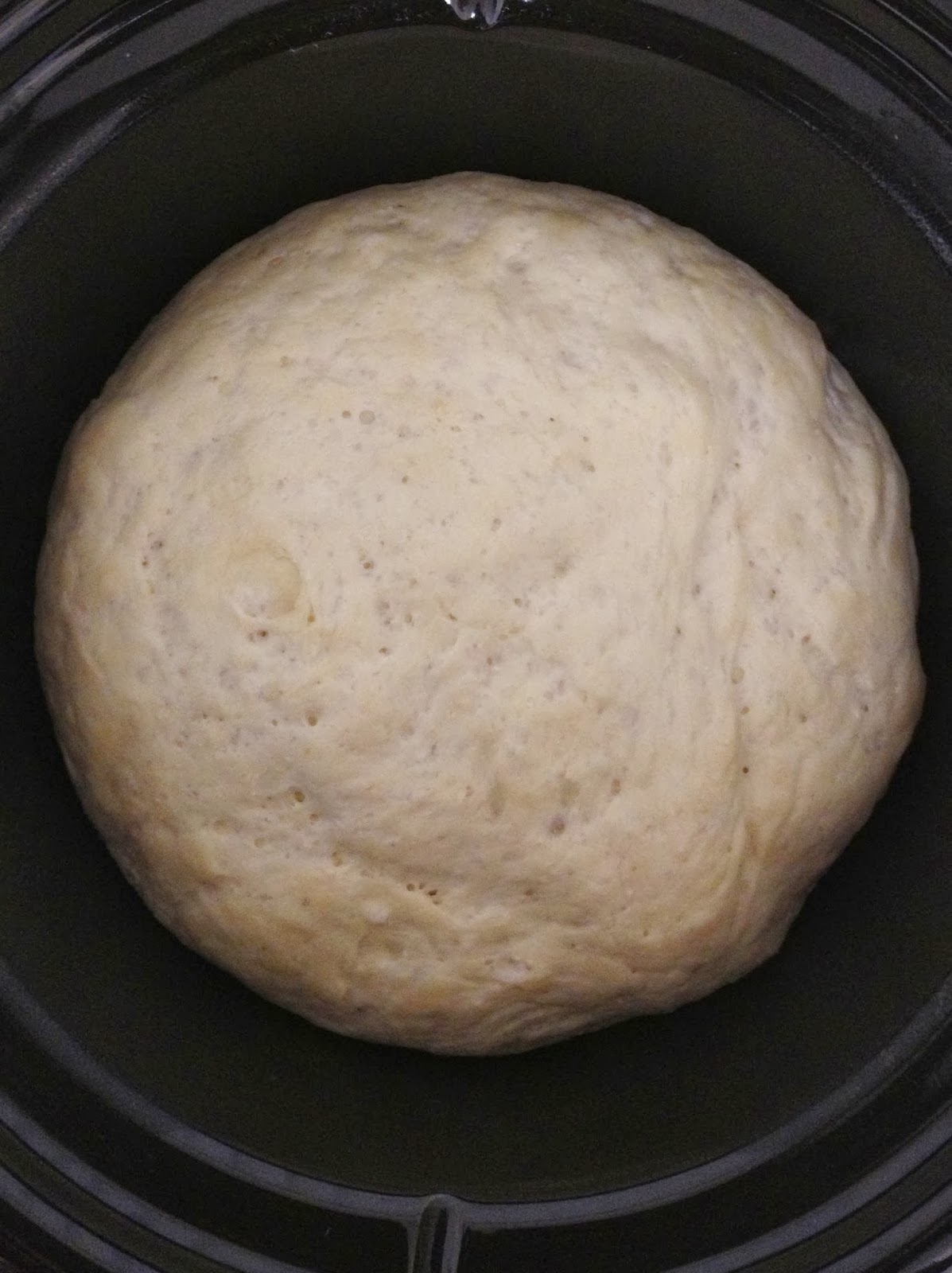
  3. Oil your palms with a tsp of olive oil and shape the dough into a ball. Let it rest in a covered bowl in a draft-free, warm place such as an unheated oven. After 60 - 90 minutes when the dough has risen and doubled in size, push it down gently to release some of the yeasty gases and divide the dough into 8 - 10 pieces.
  4. Preheat the oven to 425 F/220 C with or without a pizza stone.
  5. Roll each piece of dough into a ball, cover the balls with a damp kitchen towel, and let them rest for 15 - 20 minutes. Or, roll each ball of dough into a circle, and let it rest in baking trays or any other flat surface for 15 - 20 minutes.
  6. Put 2-3 or however many uncooked pita loaves fit without being crowded on your baking surface and bake for 5-6 minutes. When the bread puffs up and takes on a slight brown colour, remove from the oven. The bread *will* brown and eventually burn if you leave it in the oven for even a minute longer than 5-6 minutes. 425 F/220 C is hot!
  7. If you're not eating these immediately, take them out of the oven, put them in a large container and cover with a damp towel until you're ready to use them. Reheat as needed.

Thursday, August 1, 2013

WALNUT-RED PEPPER DIP: MUHAMMARA

Long on hunger, short on time? Make muhammara! It will quickly become one of those things that you always serve when people come over, or even when no one comes over. And the colour is gorgeous... never hurts to be around good looking people and good looking food!

Simply omit the bread to make it gluten-free.


Walnut-Red Pepper Dip: Muhammara
Servings: makes about 2 cups

- 1 jar roasted red peppers (capsicum), drained or 2 - 3 fresh red capsicum, roasted
- 2 - 3 cloves garlic, peeled
- 1/2 cup walnut halves, toasted if you want
- 1-1/2 - 2 tbsp. pomegranate molasses
- 1-1/2 tsp. crushed red pepper (the kind you put on pizza)
- 1/4 or so of a pita, or a chunk/slice of any other bread (omit for a gluten-free dip)
- 1 tsp. salt, or to taste
- 1 - 2 tbsp. olive oil
- 1/2 tsp. cumin (optional)

1. Put everything in a food processor or blender.
2. Process till you get a well blended dip.
3. Adjust seasonings to taste.
4. Enjoy with pita, any other bread, over grilled chicken, or with crudites.

Notes:
1. Pomegranate molasses is easily available at any Middle Eastern store. You can also reduce 1/2 cup of pomegranate juice and use that instead of pomegranate molasses.
2. Make it gluten-free: omit the bread.